
Child Custody in Houston When One Parent Is Undocumented

Ready to listen
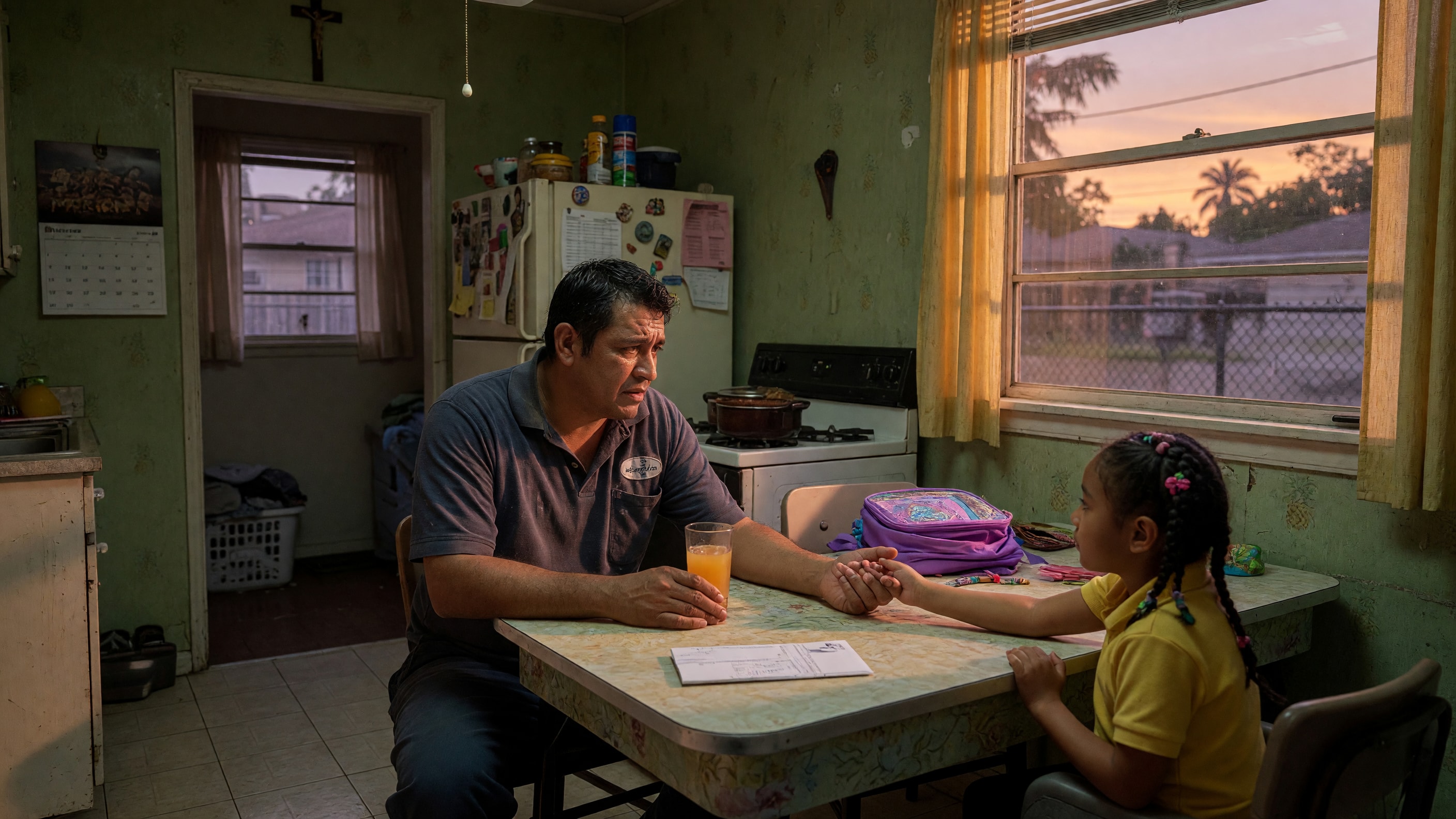
It's late at night and you're watching your kids sleep. Tomorrow might bring a court notice, an ICE encounter, or just another day of uncertainty. And the question that keeps running through your mind is: can they take my children away because I don't have papers?
The answer is no — not automatically, and not simply because of your immigration status. This guide explains how custody law actually works in Texas, what a Harris County judge considers when one parent is undocumented, and concrete steps you can take today to protect your family.
#Your Immigration Status Does Not Define Your Parenting
Texas Family Code Section 153.002 is clear: the only consideration guiding a judge in a custody case is the best interest of the child. Being undocumented does not appear on the legal list of factors the court is required to weigh when determining conservatorship.
The United States Constitution guarantees due process and equal protection to all persons on U.S. soil — including undocumented parents. Family courts cannot strip you of custody simply because you lack immigration status.
What matters is your active presence in your children's lives, the stability of the home you provide, and your demonstrated ability to care for them.
#What "Custody" Means in Texas
Texas law does not use the word "custody" — it uses the term conservatorship. There are two main types:
- Joint Managing Conservatorship (JMC): Both parents share the legal rights and responsibilities of the child. Texas law presumes this is the correct default arrangement.
- Sole Managing Conservatorship (SMC): One parent holds the primary rights. A judge only grants this when there is evidence of domestic violence, abuse, abandonment, or another serious reason to exclude the other parent.
Your immigration status, on its own, is not sufficient reason to deny you joint managing conservatorship.
#The Holley Factors: What the Judge Actually Weighs
The Texas Supreme Court established in Holley v. Adams the factors judges use to determine the child's best interest. None of the Holley factors include immigration status:
- The desires of the child (based on age and maturity)
- The current and future emotional and physical needs of the child
- Risks or dangers to the child's wellbeing
- Each parent's ability to meet those needs
- Support programs available to the parties
- Each parent's plans for the child's future
- Stability of the home environment
- Parental conduct indicating a problematic relationship with the child
- Any justification for a parent's actions or omissions
What the judge wants to know is: who has been present?, who provides stability?, which arrangement serves the child's development best? Immigration paperwork is not the question.
#When Immigration Status Can Become a Factor
Immigration status can enter the analysis indirectly in specific circumstances:
- If there is a credible risk of deportation that would prevent the parent from exercising regular parenting time
- If a parent threatens to relocate the child to another country
- If a parent has been absent due to detention and took no steps to maintain contact
This is why families in communities like Aldine, Northside, Magnolia Park, and the East End — where immigration uncertainty is part of daily life — benefit enormously from having a legal plan in place before a crisis arrives.
#If ICE Detains You: You Still Have Rights
ICE Directive 11064.4, issued July 2, 2025, expressly states that it is ICE policy not to unnecessarily interfere with the parental rights of detained individuals. This means:
- You have the right to attend your family court hearings, whether in person, by phone, or by video
- The court can issue a written order requiring your presence or participation
- ICE must designate coordinators to facilitate your participation in family proceedings
If you are detained and have an active custody case at the Harris County Family District Courts (201 Caroline St., Houston, TX 77002), request an attorney immediately. Our team can represent you in family court and coordinate with deportation defense — learn more here.
#Five Steps to Protect Your Children Right Now
Do not wait for a crisis to arrive. Here are concrete actions you can take today:
Designate a trusted caregiver. Draft a Power of Attorney for Children naming a family member or trusted friend who can care for your children if you are detained or deported.
Keep key documents accessible. Store copies of your children's birth certificates, school and medical records, and your own identification where your designated caregiver can find them quickly.

Get a formal custody order. An agreement approved by a Harris County judge carries more legal weight than a power of attorney alone and reduces the risk of CPS (Child Protective Services) intervening.
Document your active involvement. Save messages, photos from school events, records of medical appointments — any evidence that shows you are present and engaged in your children's lives.
Act within the first six months. If a third party has physical custody of your children for six months or more, that person may petition a judge for permanent custody. Do not let that window pass without a legal plan.
#How to Start a Custody Case in Harris County: the SAPCR
To get a formal custody order in Houston, you must file a SAPCR — a Suit Affecting the Parent-Child Relationship. Here is how the process works in Harris County:
- File the petition with the Harris County District Clerk's Office at 201 Caroline St., Houston, TX 77002
- The case is assigned to one of ten Family District Courts in Harris County
- The judge may issue temporary orders immediately — including who has the child while the case is pending
- Both parents present evidence at a hearing
- The judge issues a final order based on the Holley factors and the child's best interest
Your immigration status does not prevent you from filing a SAPCR. Harris County courts have no legal obligation to report your immigration situation to federal agencies.
#Contact Us — Your Consultation Is Confidential
If you live in Gulfton, Spring Branch, Pasadena, or anywhere in the Houston area, and you are worried about how your immigration situation could affect your children's custody, you do not have to face this alone.
The Law Office of Kristopher A. Alvarez has two Houston locations:
- Montrose: 1603 W. Alabama St., Houston, TX 77006
- East End: 6841 Avenue I, Houston, TX 77011
Call or text (832) 404-2300, or schedule your consultation online. Everything you share with us is completely confidential — it is not reported to any immigration agency.
Se habla español.
#Frequently Asked Questions
Can a Houston judge take my children away just because I am undocumented?
No. Under Texas Family Code Section 153.002, the judge's only consideration is the best interest of the child. Immigration status is not on the legal list of factors the court must weigh when determining conservatorship — it is not sufficient grounds to remove your parental rights.
What happens to my children if ICE detains or deports me?
If you are detained, ICE Directive 11064.4 (July 2025) establishes that you have the right to participate in your family court hearings. However, if you have no custody plan in place and no one can immediately care for your children, the State may intervene through CPS. This is why having both a power of attorney and a formal court-approved custody order in place before any detention is critical.
Can I file a custody case in Harris County if I am undocumented?
Yes. Any biological parent has the right to file a SAPCR in the county where the child lives, regardless of immigration status. Harris County courts have no legal obligation to report your status to immigration agencies.
Is a Power of Attorney for my children enough protection?
It is an important first step and should be completed right away. It allows the designated caregiver to enroll your children in school and authorize medical care. However, it has limits — after six months, the caregiver may petition a judge for permanent custody. A formal court order provides stronger, more comprehensive protection.
Can my immigration status be used against me in custody proceedings?
Not directly — it is not a statutory factor the judge must consider. It may surface indirectly if your immigration situation creates real instability affecting your ability to be present for your children. Having a family law attorney is essential to keep the case focused on what matters: your relationship with your children.
Can one attorney handle both the family law and immigration cases?
In many cases, yes. The Law Office of Kristopher A. Alvarez handles both family law and deportation defense. We can coordinate both areas to protect your family situation while managing any pending immigration matters.
This article is for general informational purposes only and does not constitute legal advice. Reading this content does not create an attorney-client relationship. For guidance specific to your situation, contact our office.
You may also like

How to File for Divorce in Houston Without Losing What's Yours
Practical Houston divorce guide: Texas community property rules, the Harris County court process, and how to protect your assets from day one.

How Probate Works in Harris County, Texas
A plain-English guide to Harris County's probate courts, independent administration, timelines, costs, and shortcuts that may let your family skip full probate.

What Does a Real Estate Attorney Actually Do at a Houston Closing?
Your title company works for everyone at the table. A real estate attorney works only for you. Here's what they do at a Houston closing.
This article is general information only and is not legal advice. Reading it does not create an attorney-client relationship.