
How to Bring Your Family to the U.S. from Houston: Step-by-Step

Ready to listen

Being separated from your family is one of the heaviest burdens you can carry. Sitting at your kitchen table at 11 p.m., it is normal to feel like the immigration process is a maze designed to keep your loved ones away from you. The fear of making a mistake, the uncertainty of waiting times, and the complex legal language can be overwhelming. But the path to reuniting with them is possible when you organize and follow the right legal steps starting right here in Houston.
This article is a clear, step-by-step guide to understanding how the family petition process works. We will explain the requirements, current costs, and what to expect during the process, so you can make informed decisions about your family's future.
#Who Can a U.S. Citizen or Permanent Resident Petition For?
The first step is understanding if U.S. immigration law allows you to sponsor your relative. Petitioning rights vary significantly depending on whether you are a U.S. citizen or a lawful permanent resident (green card holder).
U.S. citizens have the greatest flexibility. They can petition for:
- Their spouses.
- Their unmarried children under 21 years old.
- Their unmarried children over 21 years old.
- Their married children of any age.
- Their parents (if the citizen is at least 21 years old).
- Their siblings (if the citizen is at least 21 years old).
On the other hand, lawful permanent residents have more limited options. They can only petition for:
- Their spouses.
- Their unmarried children, regardless of age (though those under 21 have priority).
Permanent residents cannot petition for their parents, siblings, or children who are already married.
Your relative's status determines how quickly the case will move. Spouses, parents, and unmarried children under 21 of U.S. citizens are considered "immediate relatives." For them, a visa is always available, meaning they do not have to wait in a visa line. For other relatives, there are preference categories that require waiting for a visa number to become available according to the Department of State's Visa Bulletin.
#The Step-by-Step Family Petition Process
For the government to approve your relative's immigration, you must follow a structured process. Each stage requires precision and solid evidence.
1. File Form I-130
Everything begins by submitting Form I-130 (Petition for Alien Relative) to U.S. Citizenship and Immigration Services (USCIS). The purpose of this form is not to grant your relative an immediate visa or legal status, but rather to prove to the government that a valid and genuine family relationship exists between you two.
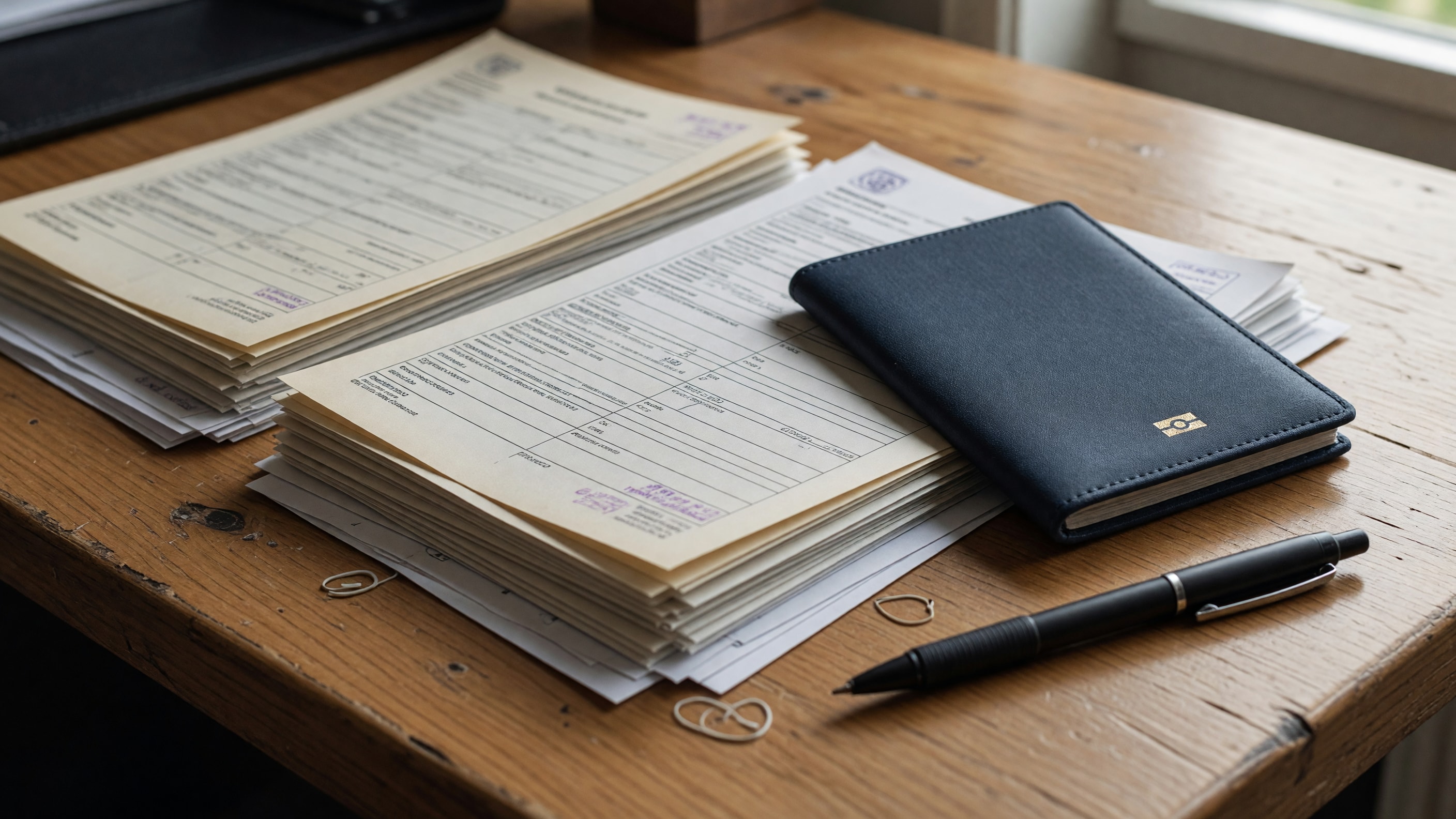
As of June 2026, the filing fee for the I-130 is $625 if filed online through the USCIS portal, or $675 if filed by paper through the mail. Alongside the form and payment, you must include strong evidence. This includes birth certificates with certified English translations, marriage certificates, proof of your U.S. citizenship or residency, and, in the case of spouses, evidence that the marriage is real (such as joint bank accounts, photos, lease agreements, and tax returns).
2. National Visa Center (NVC) or Adjustment of Status
Once USCIS approves the I-130, the case takes one of two main paths, depending on where your relative is located and how they entered the United States.
Consular Processing (Relative outside the U.S.): If your loved one is in their home country, the case moves to the National Visa Center (NVC). This is where the actual immigrant visa is processed. The NVC will require you to pay additional fees and submit Form DS-260. You will also need to submit an Affidavit of Support (Form I-864), where you prove that you have sufficient income to support your relative and that they will not become a "public charge."
Adjustment of Status (Relative inside the U.S.): If your relative is already in Houston and entered the country legally (for example, with a tourist or student visa) and is an immediate relative of a citizen, they might be eligible for an Adjustment of Status using Form I-485. This process allows your relative to apply for a permanent resident card (green card) and a work permit without having to leave the United States.
3. The Immigration Interview
The final hurdle before approval is the immigration interview. A government officer will ask questions to verify the information on the forms and, in marriage cases, confirm that the relationship is legitimate.
For those outside the country going through consular processing, the interview will take place at the U.S. embassy or consulate in their home country. For many immigrant families in Houston, this means their relative will have to travel to the consulate in Ciudad Juárez, Mexico, or to embassies in San Salvador, Guatemala City, or Tegucigalpa.
If your relative qualifies for Adjustment of Status within the United States, the interview will generally be scheduled at the local USCIS field office in Houston, located at 810 Gears Road (in North Houston) or another designated office. It is vital to attend this appointment well-prepared, carrying all original documents and updated copies of your financial evidence.
#Realistic Wait Times in 2026
The wait is often the hardest and most distressing part of the process. It is important to have clear expectations from the start.
For immediate relatives of U.S. citizens (spouses, parents, and minor children), the initial I-130 processing by USCIS currently takes between 10 and 24 months. Once approved, the NVC process and scheduling the consular interview or adjustment of status can add an additional 6 to 12 months.
For preference categories (such as siblings of citizens, adult children, or relatives of permanent residents), wait times are drastically different. Due to the annual visa limits imposed by Congress, these categories can face delays of several years, and even decades for certain countries like Mexico. While strict deadlines apply to respond to Requests for Evidence (RFEs) sent by USCIS, there is no guaranteed timeline for the final approval of your case.
#Relatives in Houston Without Legal Status: The I-601A Waiver
One of the most common situations we see in our family petitions practice is U.S. citizens wanting to petition for a spouse who crossed the border without inspection and currently lives in Houston.
The law states that if a person accrues more than one year of "unlawful presence" in the U.S. and then leaves the country for their consular interview, they are automatically hit with a 10-year bar preventing their return. To avoid this painful separation, there is the Provisional Unlawful Presence Waiver (Form I-601A). This waiver is applied for and waited on while inside the United States. Only when it is approved does the relative travel to their consular interview in their home country, with the peace of mind of knowing the unlawful presence penalty has been forgiven.
Proving that the separation would cause "extreme hardship" to the citizen or resident is the core of this waiver, and it requires meticulous legal preparation.
#Checklist: What to Prepare Before Starting Your Case
Before scheduling a consultation with an immigration attorney, gathering this documentation will save you time and give your lawyer a clear picture of your situation:
- Proof of your status: Your U.S. passport, naturalization certificate, or permanent resident card (green card).
- Beneficiary's civil documents: Your relative's birth certificate (with an English translation if necessary) and a copy of their passport.
- Marital history: Current marriage certificate, and divorce decrees from any previous marriages of both parties.
- Evidence of relationship (for spouses): Photos together over time, shared bank accounts, lease agreements in both names, and life insurance policies.
- Immigration history: Any documents of previous entries to the U.S., old visas, work permits, or notices to appear in immigration court in Houston.
- Financial information: Your most recent tax returns and pay stubs to prove you meet the financial sponsorship requirements.
#Protecting Your Family's Future
Every family is unique, and a small mistake on the forms can cause months of delays, loss of filing fees, or even the denial of the case. Worse yet, filing the wrong forms when your relative has previous immigration violations can put them at risk of deportation.
This is why having a clear strategy and reliable legal representation is essential. From our offices in the East End and Montrose, we help hardworking families navigate these complex processes. We understand the stress this generates and work to avoid the common traps that keep loved ones separated.
#Frequently Asked Questions
How much does it cost to file an I-130 family petition?
As of June 2026, USCIS charges $625 to file Form I-130 online and $675 if filed by paper. This cost is only the initial fee and does not include later expenses, such as Adjustment of Status, National Visa Center fees, or required medical exams.
Can I petition for my spouse if they entered the United States unlawfully?
It depends on your status and the details of your partner's immigration history. If you are a U.S. citizen, you can petition for your spouse, but if they entered without inspection, they generally cannot adjust their status from within Houston; they will need to process an I-601A waiver and leave for their consular interview.
What happens if USCIS asks for more evidence (RFE)?
You must respond immediately and send exactly the documentation they are requesting. USCIS imposes strict deadlines to respond to a Request for Evidence (RFE); if you do not respond in time, your case will be denied and you will lose the money paid.
Where will my relative's immigration interview take place?
If your relative is outside the country or must leave for consular processing, the interview will be at the U.S. embassy or consulate in their home country. If they qualify to adjust their status without leaving the U.S., the interview will take place at the local USCIS field office, such as the one located at 810 Gears Rd in Houston.
How long does a petition for a sibling take?
The process for siblings of U.S. citizens takes many years, often between 15 and 20 years depending on the country of origin. This is because the law imposes a strict annual visa limit for this category, creating a long waiting list on the Visa Bulletin.
Does my tax history affect my relative's petition?
Yes, your taxes are fundamental to the process. To be the financial sponsor (Form I-864), you must prove through your recent tax returns that your income exceeds the federal poverty guidelines established by the government for your household size.
#Schedule a Consultation
Do not leave your family's future to chance or try to guess which forms you need to download from the internet. Call or text us at (832) 404-2300 to schedule a consultation. Our bilingual team at the Law Office of Kristopher A. Alvarez, PLLC is ready to confidentially evaluate your case at our Montrose or East End offices. Book your consultation here.
You may also like
TPS in Houston: Who Qualifies and What to Do Right Now
Confused about TPS in 2026? Learn the latest updates for Venezuela, El Salvador, and Honduras, and what Houston immigrants must do to protect their status.

DACA Renewal in Houston: What You Must Know Before Your Deadline
Complete guide for Houston Dreamers: when to renew DACA, which forms to file, current fees, processing times, and what to do if your DACA already expired.

Can I Work Legally in Houston While My Immigration Case Is Pending?
Houston immigrant guide: who qualifies for a work permit (EAD) with a pending case, what changed in 2025-2026, and how to apply step by step.
This article is general information only and is not legal advice. Reading it does not create an attorney-client relationship.