
Can I Still Sue If the Houston Accident Was Partly My Fault?

Ready to listen
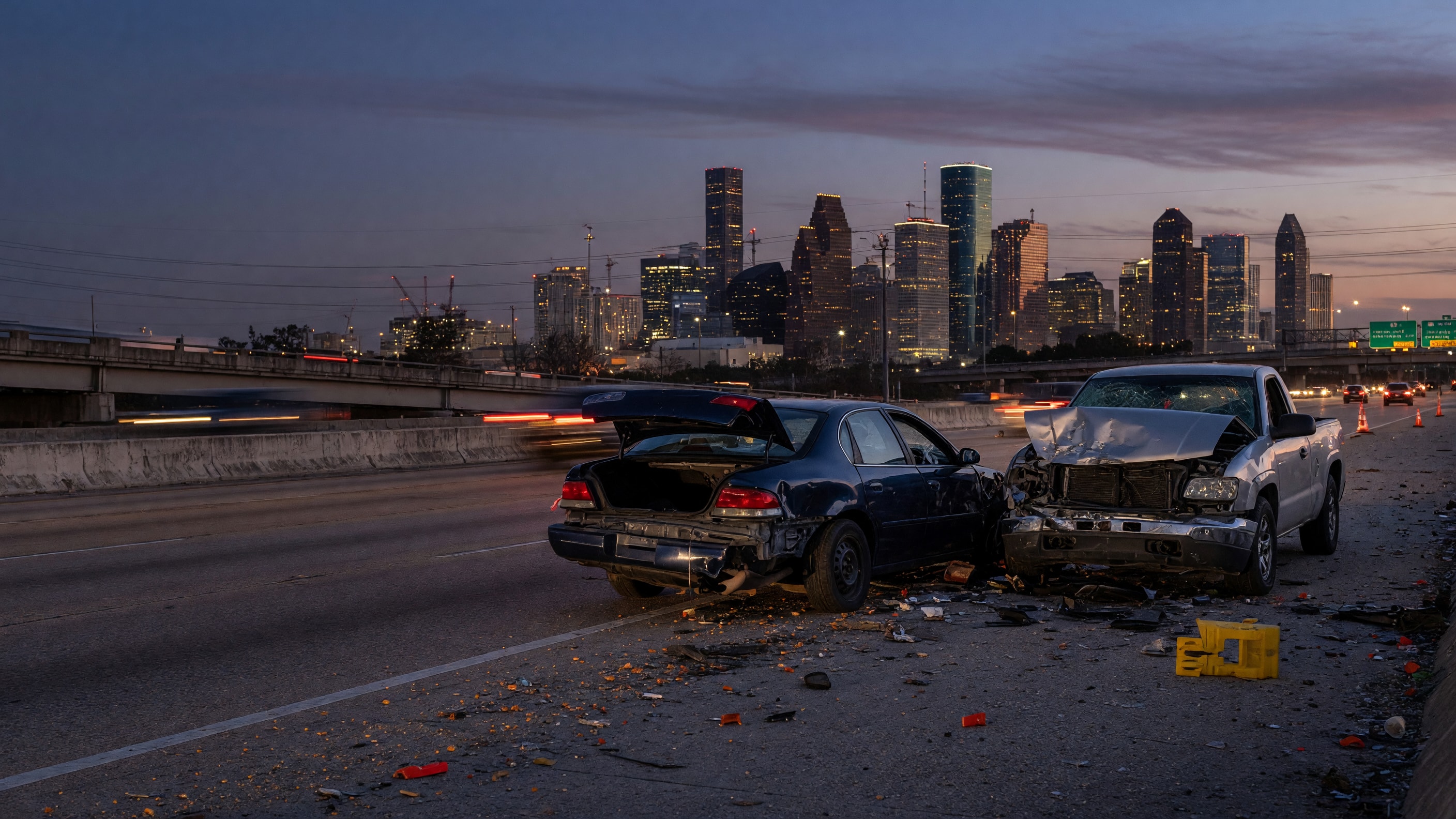
You are sitting at your kitchen table late at night, staring at a stack of medical bills from a recent car crash on I-45. You know the other driver caused the collision, but the insurance adjuster called today and claimed you were "partially at fault" for speeding or braking too late. Now, you are terrified that this single accusation means you will get absolutely nothing to cover your injuries, your property damage, or your lost wages.
This is a common fear, and insurance companies rely on it to pressure injured Houstonians into giving up. However, the law in Texas is clear: sharing a small part of the blame does not automatically destroy your case. By understanding how fault is actually calculated, you can protect your rights and fight back against unfair blame.
#The 51% Bar Rule: How Texas Comparative Fault Works
In Texas, the law recognizes that a motor vehicle accident is not always 100% one person's fault. Under Chapter 33 of the Texas Civil Practice and Remedies Code, the state follows a legal framework known as "proportionate responsibility," often referred to as modified comparative fault.
The most critical aspect of this law is the 51% Bar Rule. Here is exactly how it works:
- If you are 50% or less at fault for the crash, you can still recover damages.
- If an insurance adjuster or a Harris County jury determines you are 51% or more at fault, you are completely barred from receiving any compensation.
Some states use a harsh system where even 1% of fault ruins your claim, while others allow you to sue even if you are 99% responsible. Texas strikes a strict middle ground. Because the 51% mark is the absolute cut-off, insurance companies will fight aggressively to push your share of the blame just over that halfway line.
#What Happens to Your Compensation if You Are Partly to Blame?
If your percentage of fault stays at 50% or below, you still have a valid personal injury claim. However, your final compensation will be reduced by your exact percentage of fault.
For example, imagine you are involved in a partial fault accident in Pasadena, and your total damages for medical bills, pain and suffering, and lost wages equal $100,000. If an investigation determines that the other driver running a red light was 80% responsible, but you were 20% responsible because you were driving slightly over the speed limit, your compensation is reduced by 20%. You would receive $80,000.
Every single percentage point matters. A finding of 50% fault versus 51% fault is literally the difference between receiving half of your damages and receiving absolutely nothing.
#How Insurance Companies Weaponize "Partial Fault"
Insurance adjusters are highly trained professionals whose primary job is to protect their company's bottom line. They know that assigning you a higher percentage of fault directly saves them money.
One of their most common tactics is requesting a "recorded statement" shortly after the crash. They will call you when you are vulnerable, asking leading questions and hoping you will apologize or admit you could have done something differently. Even an innocent statement like, "I guess I didn't see them until the last second," can be twisted by the adjuster to claim you were distracted and therefore partially at fault.
Adjusters may also scour your social media accounts. If you post a brief apology online or mention that traffic was heavy, they will use those words against you. You are never legally required to give a recorded statement to the at-fault driver's insurance company.
#The Police Report (CR-3) Is Not the Final Word
When the Houston Police Department or the Harris County Sheriff's Office responds to a crash, they fill out a Texas Peace Officer's Crash Report, officially known as Form CR-3. As of June 2026, TxDOT data shows that a reportable crash occurs every 57 seconds in Texas, and Houston recorded a devastating 301 traffic fatalities in 2024 alone. Officers are often rushing from one severe scene to the next.
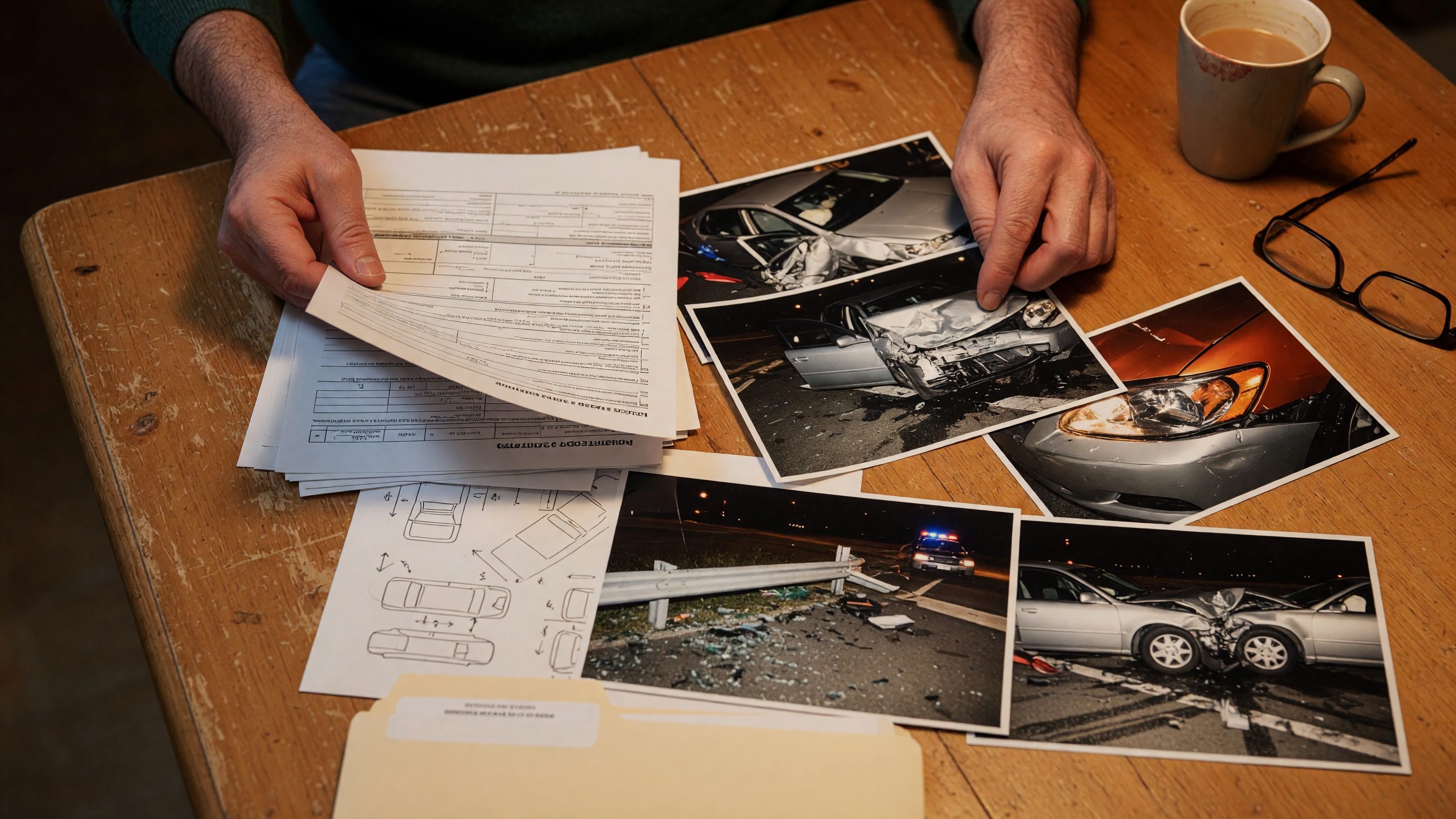
Because of this chaotic environment, the police report is not always completely accurate. The officer might issue a citation to both drivers or check a "contributing factor" box that implies shared blame. Furthermore, officers often only get a statement from the driver who is walking around unhurt, while the severely injured driver is being loaded into an ambulance.
It is crucial to understand that a police report is just one piece of evidence; it is not a final legal conclusion of civil liability. An experienced attorney can challenge a biased report using traffic camera footage, black-box vehicle data, and witness testimony. This is especially vital in complex Houston truck accidents where commercial carriers quickly send their own investigators to control the narrative.
#Does Immigration Status Affect My Right to Sue?
Many undocumented immigrants in Houston fear that if they are involved in a crash—even one they did not cause—they cannot take legal action, or that they might face deportation if they try. This is entirely false.
The 14th Amendment of the U.S. Constitution protects the right of any person within its jurisdiction to seek equal protection under the law. Furthermore, the Texas Supreme Court established in TXI Transportation Co. v. Hughes that a plaintiff's immigration status is not admissible as evidence to bar a personal injury claim.
You have the exact same right to seek compensation for your medical bills, lost earning capacity, and pain and suffering as a U.S. citizen. The insurance company cannot use your status as a weapon to deny your claim or force a cheap settlement. At our firm, any consultation you have regarding your injury is strictly confidential.
#Steps to Take if You Are Being Blamed for a Houston Crash
If you are involved in a collision on the 610 Loop, Beltway 8, or any local street, and you suspect the other party will try to share the blame, follow this ordered process to protect your claim:
- Do not apologize or admit fault: At the scene and on the phone, stick strictly to the basic facts. Never say "I'm sorry" or guess what happened.
- Seek immediate medical attention: Even if you feel fine, adrenaline can mask serious injuries. A prompt medical record proves your injuries were directly caused by the crash, preventing the insurer from blaming a pre-existing condition.
- Document the scene: If you are physically able, take photos of vehicle damage, skid marks, and the surrounding area. Collect contact information from any neutral witnesses.
- Decline the recorded statement: If the other driver's insurance calls, politely tell them you will be hiring an attorney and hang up.
- Stay off social media: Do not post photos of the accident, updates on your medical condition, or any commentary about who was at fault.
- Contact a personal injury attorney: Before you accept a lowball settlement offer, let a professional evaluate the true value of your case and handle the fault dispute.
#Frequently Asked Questions
If I wasn't wearing a seatbelt, am I automatically at fault?
No, not wearing a seatbelt does not automatically make you at fault for the crash itself. However, the insurance company may argue that your failure to wear a seatbelt contributed to the severity of your physical injuries, which could potentially reduce your compensation under Texas comparative fault rules.
Can I still get a settlement if I was hit by an uninsured driver?
Yes, you may still be able to recover compensation. If you carry Uninsured/Underinsured Motorist (UM/UIM) coverage on your own auto policy, you can file a claim with your own insurance company, and the same comparative fault rules will apply.
How long do I have to file a lawsuit if I am partly at fault?
Texas has a strict statute of limitations that sets a deadline for filing a personal injury lawsuit. While the exact timeline can vary depending on the specific facts of your case, waiting too long can permanently destroy your right to recover anything.
Will my case have to go to court in Harris County?
Not necessarily. Many partial fault car accident cases are settled out of court through aggressive negotiation with the insurance adjusters. We only file a lawsuit and take a case to a Harris County civil court if the insurance company refuses to offer a fair settlement.
What if the insurance adjuster already decided I am 51% at fault?
The insurance adjuster does not have the final legal authority to decide fault. Their initial determination is simply their company's negotiating position, and an experienced attorney can gather independent evidence to dispute their findings and shift the liability back to the responsible driver.
#Schedule a Consultation Today
If you were injured in a crash and the insurance company is trying to blame you, do not face them alone. The Law Office of Kristopher A. Alvarez, PLLC is here to help you fight back. We offer consultations for car accident and personal injury cases, and you pay no attorney fees unless we recover compensation for you.
Call or text us at (832) 404-2300. You can also schedule a consultation online. We have offices in Montrose and the East End to serve you and your family.
You may also like
What to Do If You Were Injured in a Houston Hit-and-Run
Injured in a Houston hit-and-run? Learn how to get your HPD report, use uninsured motorist coverage, and protect your rights. No fee unless we win.

Truck Accidents on I-10 and I-45 in Houston: Why These Cases Are Different
Hit by a semi-truck on I-10 or I-45 in Houston? Learn why commercial truck cases differ legally — and what evidence you must preserve immediately.
Uber or Lyft Accident in Houston: Who Actually Pays Your Medical Bills?
Hurt in an Uber or Lyft in Houston? The $1M coverage window, the 3 insurance phases, and the exact steps to protect your claim — explained in plain language.
This article is general information only and is not legal advice. Reading it does not create an attorney-client relationship.