
Child Support in Texas: How It's Calculated and How to Collect It in Houston

Ready to listen

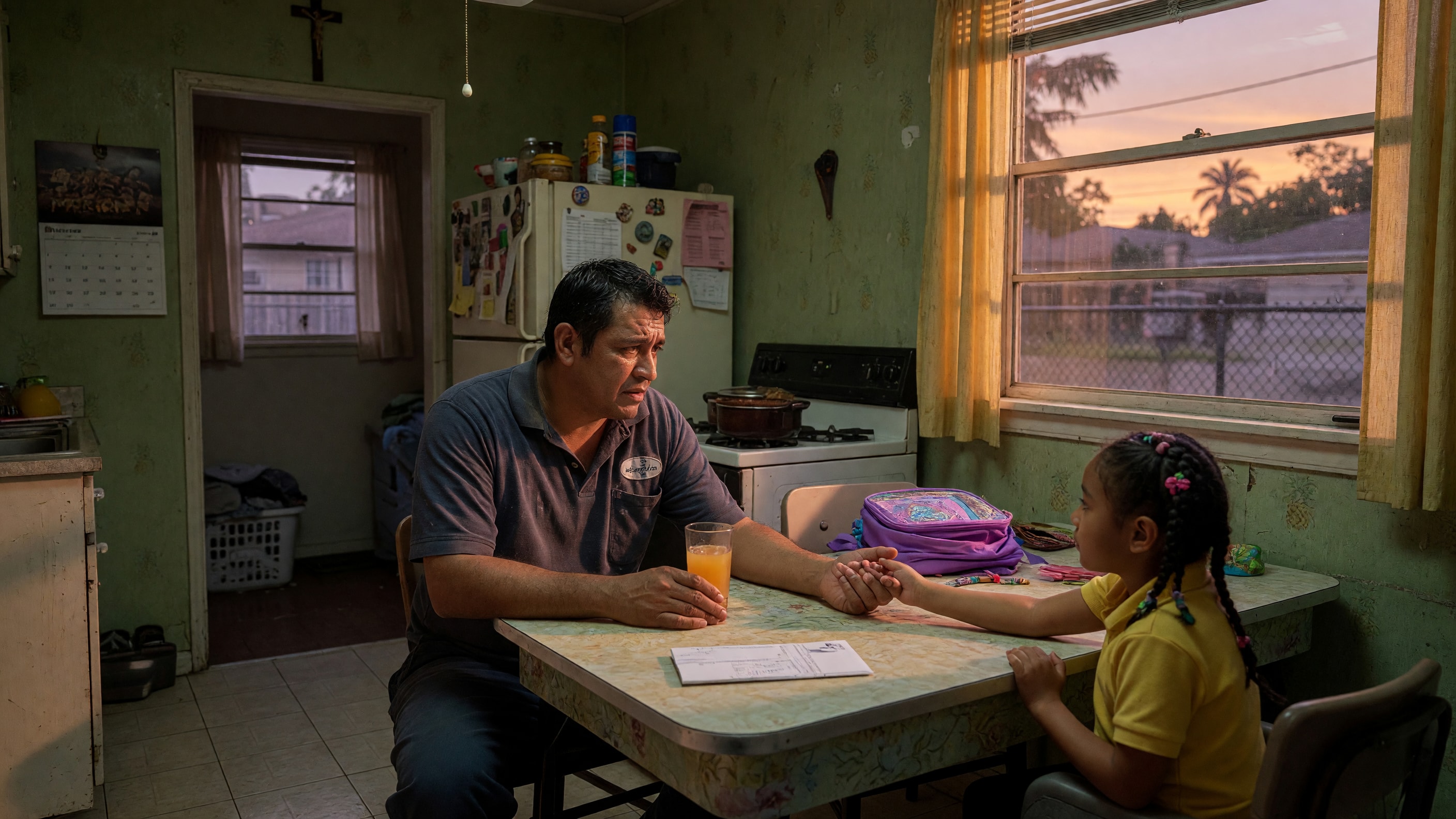
Sitting at your kitchen table at 11:00 p.m., looking at bills and wondering how you will afford groceries and rent for your kids, is a terrifying feeling. Whether you need to establish a support order for the first time or the other parent has suddenly stopped paying, the Texas legal system can feel like a maze. At the Law Office of Kristopher A. Alvarez, PLLC, we explain step-by-step how child support works so you can protect your family's future.
#How Texas Calculates Child Support (The OAG Formula)
In Texas, child support is not based on guesswork or who argues the loudest. Instead, it relies on a strict mathematical formula established by the Texas Family Code. The Office of the Attorney General (OAG) and Harris County judges calculate support using the paying parent's (the noncustodial parent's) "net resources."
Net resources are not the same as a person's gross income or take-home pay. To calculate them, the court takes the total income from all sources and subtracts federal income taxes, Social Security taxes, union dues, and the cost of the children's health and dental insurance premiums.
As of September 2025, Texas law increased the maximum cap on net resources to $11,700 per month. If a parent earns more than this amount, the standard calculation generally stops at that cap, though courts have the discretion to order additional support if the child's proven needs require it.
#Texas Family Code Percentages
Once the monthly net resources are determined, the law applies a specific percentage based on how many children are involved in the case. Here is the standard percentage process applied by the courts:
- One child: 20% of the parent's net resources.
- Two children: 25% of the parent's net resources.
- Three children: 30% of the parent's net resources.
- Four children: 35% of the parent's net resources.
- Five children: 40% of the parent's net resources.
- Six or more children: Not less than 40%.
Note: If the paying parent already supports other children from a previous relationship, these percentages are slightly reduced to account for their existing financial duties.
#Medical and Dental Support: An Additional Obligation
In addition to basic child support, the Texas Family Code requires courts to establish a medical and dental support order. This means that one parent must provide health and dental insurance for the children. If the custodial parent already provides insurance through their employer or programs like Medicaid, the paying parent is typically ordered to reimburse the cost of those premiums.
This additional cost is calculated separately from the standard percentages mentioned above. Based on current guidelines as of June 2026, the cost of medical support cannot exceed 9% of the paying parent's net resources, and dental insurance is capped at 1.5%. Having these numbers clearly defined ensures that the final court order accurately reflects the financial responsibilities of both parents in Houston.
#Why You Need a SAPCR Order in Houston
In Texas, child support is almost always part of a Suit Affecting the Parent-Child Relationship, commonly known as a SAPCR. If you and your partner are unmarried, or if you are going through a divorce, a SAPCR is the legal document that establishes not only child support but also custody (conservatorship) and visitation schedules.
Without a SAPCR order signed by a Harris County judge, any verbal agreement you have with your ex-partner carries no legal weight. If the other parent suddenly stops paying or refuses to return the child, the Houston Police Department cannot intervene to enforce a handshake deal. Formalizing your arrangement through a SAPCR protects your rights and provides stability for your family.
#How Wage Withholding Orders Work in Harris County
Many parents in neighborhoods like Spring Branch or Aldine worry about having to chase down their ex every month to collect a check. Fortunately, in Harris County, over 80% of child support payments are made through an Income Withholding Order (IWO).
When a judge in the Harris County Family District Courts (located at 201 Caroline Street) approves the order, it is sent directly to the paying parent's employer. By law, the employer must deduct the exact support amount from each paycheck and send it to the Texas State Disbursement Unit. The state then transfers the funds to you. This system removes the stress of monthly confrontations and ensures a reliable payment schedule.

#What to Do When the Other Parent Refuses to Pay in Houston
If the other parent stops paying, strict legal tools exist to force compliance. Non-payment is a serious issue, and Houston courts do not take it lightly. Enforcement options include:
- Bank and Property Liens: The state can place liens on property or intercept federal tax refunds.
- License Suspensions: Texas can suspend driver's licenses, professional licenses, and even passports.
- Contempt of Court: A judge can hold the non-paying parent in contempt, which can result in severe fines and up to six months in the Harris County jail.
#Immigration Status and Child Support
At our Montrose and East End offices, we frequently hear this fear: "I am undocumented, can I ask for child support?" or "My child's parent doesn't have papers, can we still get an order?"
The answer is yes. Under Texas law, your immigration status does not prevent you from requesting child support, nor does it excuse a parent from their financial duty. Houston family courts exist to protect the well-being of children, not to act as immigration enforcement. All consultations at our office are strictly confidential, and your status will not be used against you in seeking support for your child.
#The Difference Between the OAG and a Private Family Attorney
Many families in Houston assume they must go through the Office of the Attorney General (OAG) to set up child support. While the OAG handles thousands of cases, it is crucial to understand that their attorneys represent the State of Texas, not you. Their offices are often overwhelmed with massive caseloads, meaning your case could take months to process.
By hiring a private family law attorney in Houston, you gain dedicated legal representation. A private lawyer can expedite the process, ensure the other parent's income is calculated accurately (especially if they hide assets or work for cash), and file emergency motions if necessary. Your attorney fights exclusively for your family's best interests.
#Frequently Asked Questions
How long do I have to claim unpaid child support in Texas?
There is a strict legal deadline under Texas law for filing a lawsuit for back child support, known as arrears. Generally, you must file an enforcement action within a specific timeframe after the child turns 18 or graduates from high school. Acting quickly is essential to protect your right to collect.
Can child support be changed if the paying parent loses their job?
Yes, it is possible to request an official modification of the court order. However, the amount does not change automatically. The parent must continue paying the original amount until a Houston judge approves the new order.
Does paying child support automatically grant visitation rights?
Not automatically in the same document, though they are usually handled together in a SAPCR order. Paying child support and having visitation rights (possession and access) are two separate legal issues. A parent cannot legally withhold payment just because visitation is denied.
What if the parent is self-employed or paid in cash?
The court can calculate their income based on earning potential, bank deposits, or past employment. Texas law presumes that a parent can earn at least full-time minimum wage, even if they claim to have zero income.
Is the Office of the Attorney General (OAG) my lawyer?
No. The OAG represents the State of Texas and its interests, not you personally. Hiring a private family law attorney in Houston ensures someone is advocating exclusively for your family's rights.
#Protect Your Child's Future with a Houston Family Law Attorney
Navigating the Harris County family court system downtown near I-45 can be overwhelming. At the Law Office of Kristopher A. Alvarez, PLLC, we understand what you are going through. You do not have to face this alone.
Contact us to schedule a consultation and discuss your child support case. Call or text us at (832) 404-2300. Visit our Montrose office (1603 W. Alabama St., Houston, TX 77006) or our East End office (6841 Avenue I, Houston, TX 77011). You can also book your appointment online at https://kristopheralvarez.com/en/book. Se habla español.
You may also like

How to Get an Emergency Protective Order in Houston
Step-by-step guide to getting an emergency protective order in Houston, TX. Three types, no filing fee, regardless of immigration status. Call (832) 404-2300.
Child Custody in Houston When One Parent Is Undocumented
Does being undocumented affect your custody rights in Houston? Learn what Texas law actually says and the concrete steps to protect your children today.

How to File for Divorce in Houston Without Losing What's Yours
Practical Houston divorce guide: Texas community property rules, the Harris County court process, and how to protect your assets from day one.
This article is general information only and is not legal advice. Reading it does not create an attorney-client relationship.