
How to Get an Emergency Protective Order in Houston

Ready to listen

If you're reading this in the middle of the night, afraid of what tomorrow might bring, the first thing to know is: you are not alone, and you have real options. Texas law and Harris County resources are designed specifically to protect you —regardless of your immigration status, regardless of whether you speak English, and with no filing fee required.
This guide explains the three types of protective orders available in Harris County, how to obtain each one, and what to do while the process moves forward.
#What Is a Protective Order?
A protective order is a legal order issued by a judge that prohibits another person —a partner, ex-partner, family member, or household member— from approaching you, contacting you, or being near your home, workplace, or children's school.
Under Texas Family Code § 71.004, "family violence" includes not just physical assault but also:
- Threats that reasonably place you in fear of physical harm
- Sexual abuse
- Violence or abuse directed at a child of the household
- Violence between dating partners (dating violence)
You do not need visible injuries or a prior police report to qualify for protection.
#The Three Types of Protective Orders in Harris County
1. Emergency Protective Order (EPO)
This is the fastest option. It is issued when a household member is arrested for family violence, and a magistrate issues it —you do not need to take any action to request it in that moment.
Duration: As of September 1, 2025 (Texas Senate Bill 2196), EPOs now last 61 to 91 days. If the abuser used a deadly weapon during the incident, the order must last 91 to 121 days.
Legal authority: Texas Code of Criminal Procedure, Article 17.292.
You do not need to be present. The magistrate can issue the order without you attending the hearing. You may also ask a Houston Police Department officer or a prosecutor to request an EPO on your behalf, even without a prior arrest.
2. Temporary Ex Parte Protective Order
If there was no arrest, you can apply for this order directly at the courthouse. It is called ex parte because the judge can grant it without the abuser being present or notified in advance.
- Duration: Up to 20 days, renewable (Texas Family Code, Chapter 83).
- Where to apply: Civil Intake, 201 Caroline St., 1st Floor, Houston, TX 77002. You may also go to the 280th Protective Order Court, located at 1200 Congress St., 7th Floor, Houston, TX 77002 —the only court in Texas dedicated exclusively to protective orders. Hearings are held Monday through Thursday at 9:00 AM.
- Filing fee: $0. Texas Family Code § 81.002 prohibits charging the victim any fee to file, serve, or obtain a protective order.
- What you need: Your address, the abuser's address, names of any witnesses, and any evidence available (photos, screenshots of threatening messages, medical records).
3. Final Protective Order
This is the most durable option. It requires a full court hearing where both parties can present evidence.
- Duration: Up to 2 years (Texas Family Code, Chapter 85). It can be permanent if there was serious bodily injury, sexual assault, or use of a firearm.
- Estimated timeline: The Harris County District Attorney's Protective Orders Section (713-274-0212) typically takes 4 to 6 weeks to complete the case.
- What it can include: Removal of the abuser from the shared home, a prohibition on all contact (calls, texts, social media, messages through third parties), a minimum stay-away distance from your home, workplace, and children's school (typically 100 to 500 feet), and surrender of all firearms.
#Step by Step: How to Start the Process Today
- If you are in immediate danger: Call 911. HPD's Family Violence Unit (713-308-1100) can arrest the abuser and request an emergency protective order.
- Call the HAWC crisis line: Houston Area Women's Center, 713-528-2121, available 24/7, confidential. Services include emergency shelter (up to 3 months), counseling, and legal advocacy.
- Gather evidence while you can: Photos of injuries, screenshots of threatening messages, medical records, and names and contact information of witnesses.
- Go to the courthouse (if no arrest occurred): Head to 201 Caroline St., 1st Floor (Civil Intake) or the 280th Protective Order Court at 1200 Congress St., 7th Floor. There is no filing fee.
- Consider speaking with an attorney. The process can feel overwhelming alone. An attorney can help you complete the application correctly, ensure the order covers everything you need, and represent you at the final hearing.
#What the Judge Can Order the Abuser to Do
A Texas protective order can require the abuser to:

- Leave the shared home, even if the abuser is the property owner or on the lease
- Stop all contact —direct and indirect, including messages sent through third parties
- Stay a minimum distance from your home, workplace, and children's schools (typically 100 to 500 feet)
- Surrender all firearms (required under both Texas state law and federal law; possessing a firearm while subject to a qualifying protective order is a federal felony)
- Comply with temporary child custody arrangements while the order is in effect
- Pay temporary child or spousal support
What Happens If the Order Is Violated
Violating a protective order in Texas is a criminal offense. A first violation can be charged as a Class A misdemeanor (up to one year in county jail and a $4,000 fine). A second or subsequent violation —or any violation involving assault or stalking— rises to a third-degree felony (2 to 10 years in prison and up to $10,000 in fines). Every call, text, or unauthorized visit counts as a separate offense.
If the abuser contacts you after a protective order is in place, preserve the evidence and call 911 immediately.
#If You Are an Immigrant: Your Rights Are the Same
Many families in neighborhoods like Northside, Gulfton, Alief, Magnolia Park, and East End fear calling the police because of immigration concerns. That fear is understandable —but here is what you should know:
- Your immigration status does not prevent you from getting a protective order. Texas courts do not check or verify immigration status when a person applies for protection.
- Attorney-client consultations are completely confidential. What you share with your lawyer is protected by professional privilege.
- Being a crime victim may actually strengthen your immigration case. Victims of certain crimes may qualify for special visas (such as the U visa). We can help you understand those options.
- You are not required to disclose your immigration status to police officers.
Our bilingual attorneys serve clients in both Spanish and English at our two Houston offices: Montrose (1603 W. Alabama St., Houston, TX 77006) and East End (6841 Avenue I, Houston, TX 77011). Schedule a consultation at kristopheralvarez.com/agendar or call (832) 404-2300.
#Houston Safety Resources
- Houston Area Women's Center (HAWC): 713-528-2121 (24/7 crisis line, confidential)
- HPD Family Violence Unit: 713-308-1100
- Harris County DA's Office — Protective Orders Section: 713-274-0212
- Texas Law Help (free): texaslawhelp.org
#Frequently Asked Questions
How long does it take to get a protective order in Houston?
A temporary ex parte order can be granted the same day you file, without the abuser being notified. A final protective order typically takes 4 to 6 weeks because it requires a full court hearing where both parties participate.
Do I need a lawyer to apply for a protective order?
An attorney is not legally required to file a protective order application, but having one can make a significant difference. A lawyer can ensure your application is complete, includes every protection you need, and can represent you at the final hearing before the judge.
Can I get a protective order if we are not married and have no children together?
Yes. In Texas, protective orders for family violence apply between family members, household members, and dating partners —not only between spouses or people who share children.
What should I do if the abuser violates the order and comes back to the house?
Call 911 immediately and preserve any evidence of the violation —messages, recordings, witness accounts. Violating a protective order is a criminal offense and can result in the abuser's arrest and prosecution.
Will the order force him to leave the house if he pays rent?
Yes. A protective order can include a provision requiring the abuser to vacate the shared home, even if the abuser is the primary tenant or the property owner. This is one of the most powerful protections available under Texas law.
Can I apply for a protective order if I don't speak English?
Yes. Harris County courts are required to provide interpreters. The Harris County DA's Office and HAWC also have bilingual staff. Our firm handles cases entirely in Spanish —call us at (832) 404-2300 or schedule at kristopheralvarez.com/agendar.
If you believe your safety or your children's safety is at risk, do not wait. Contact us today to schedule a confidential consultation. Our bilingual attorneys are ready to help you understand your options and protect your family.
(832) 404-2300 · Se habla español · Schedule a Consultation
Montrose: 1603 W. Alabama St., Houston, TX 77006 East End: 6841 Avenue I, Houston, TX 77011
#Related services
You may also like
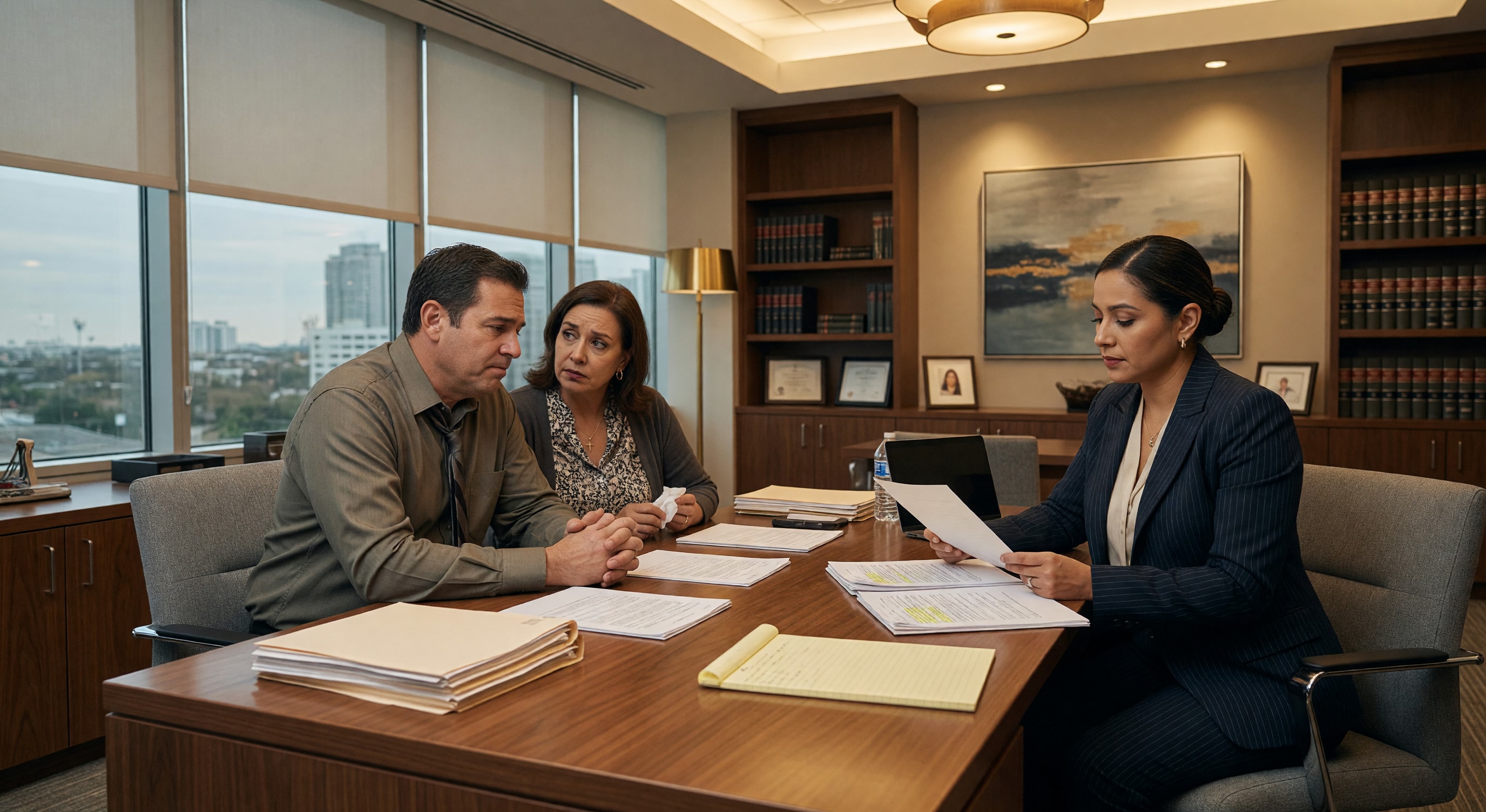
How to File for Divorce in Houston Without Losing What's Yours
Practical Houston divorce guide: Texas community property rules, the Harris County court process, and how to protect your assets from day one.
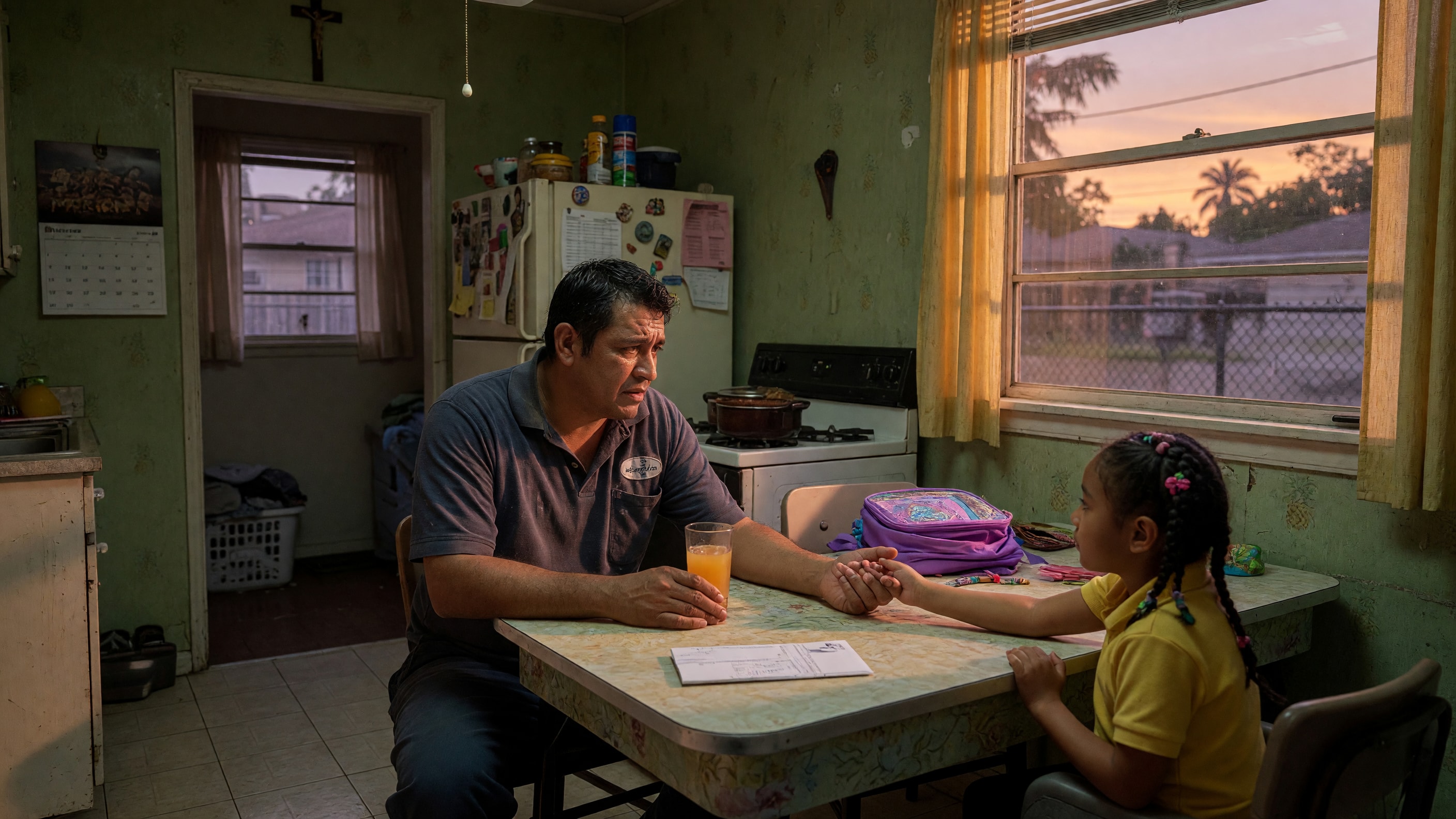
Child Custody in Houston When One Parent Is Undocumented
Does being undocumented affect your custody rights in Houston? Learn what Texas law actually says and the concrete steps to protect your children today.

How to Prepare for Your Asylum Interview in Houston
Step-by-step guide to Houston asylum interviews: what to bring, how to build your narrative, and the Águila Method that turns fear into preparation.
This article is general information only and is not legal advice. Reading it does not create an attorney-client relationship.