
Do I Need a Will in Texas? A Houston Guide

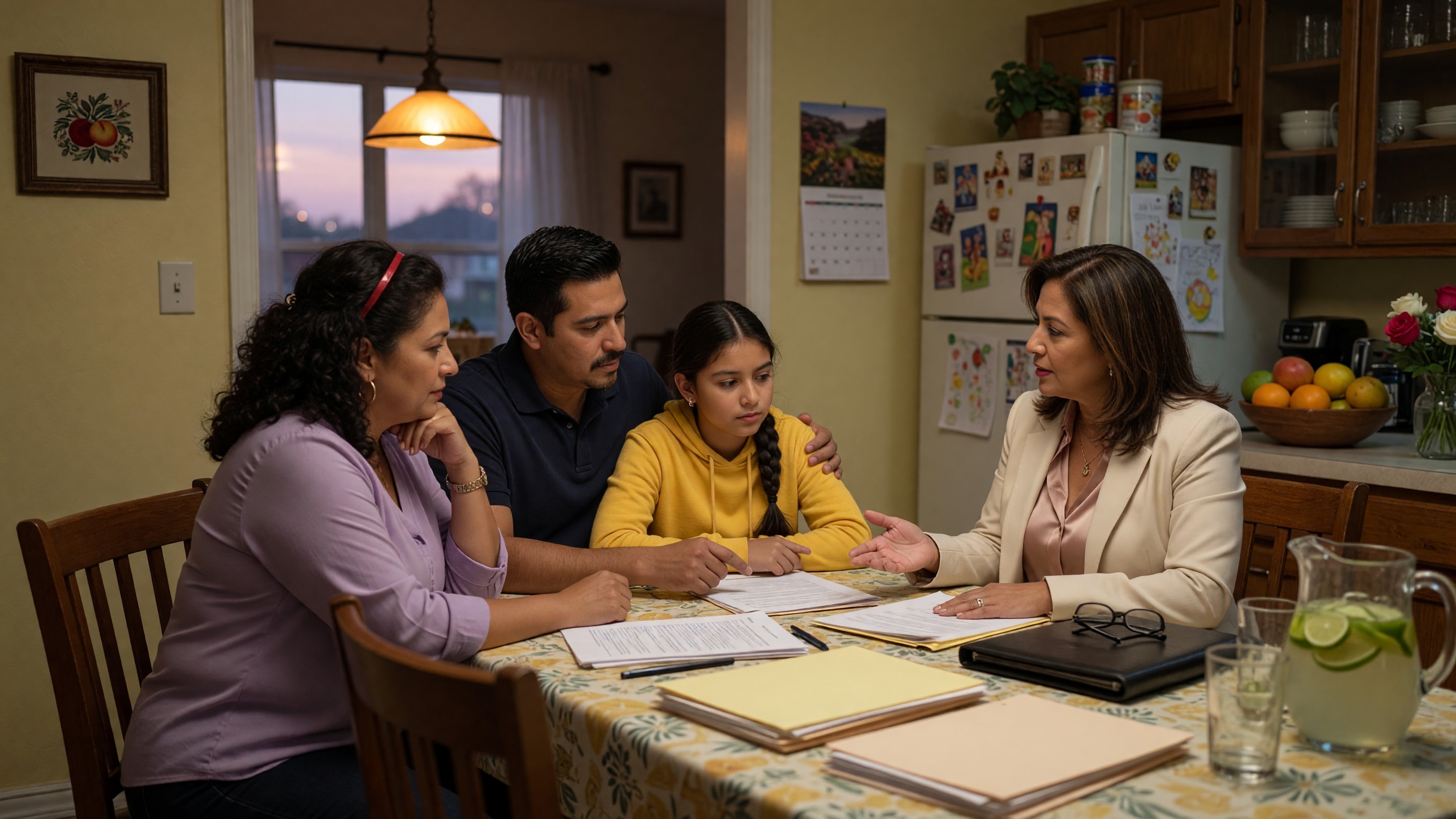
It's late. The kids are in bed, the house is quiet, and you're turning over a question you keep putting off: what happens to them if something happens to me? If you don't have a will, the answer belongs to the State of Texas — not to you.
Every Houston adult with a home, a bank account, children, or people who depend on them needs a will. It doesn't matter whether you've lived here three years or thirty, whether you own one small rental in the East End or a portfolio of properties, or what your immigration status is. A will is the most direct act of protection you can give your family — and it costs far less than the alternative.
#What Is a Will in Texas?
A last will and testament is the legal document in which you declare:
- Who inherits your assets: your home, bank accounts, vehicle, personal belongings
- Who administers your estate: your executor, the trusted person who carries out your instructions
- Who cares for your minor children: your guardian, if you and the other parent are both gone
Without a will, those three decisions go to Texas. The Texas Estates Code has its own rules — and the results regularly blindside the families left behind.
#What Happens If You Die Without a Will in Houston?
Texas Estates Code Chapter 201 governs intestate succession — how your assets are distributed when you die without a will. The rules are fixed and take no account of your wishes, your family's history, or the real-world needs of the people you leave behind.
The scenario that surprises families with children from prior relationships most:
If you own separate property (a house you bought before marriage, or inherited) and die without a will leaving children from a prior relationship, your surviving spouse may receive only a life estate in one-third of that real property. They cannot sell the house without your children's consent. Your partner is legally trapped in a property they cannot control alone.
Texas is a community property state:
Everything you and your spouse earned during the marriage belongs to both of you equally, 50/50. Without a will, your half of community property may pass directly to your children — even if your spouse needs it to pay next month's rent.
What about your minor children?
Without a will, a judge at the Harris County Probate Courts — located at 201 Caroline St., Houston — decides who raises your children, following the statutory priority list in the Estates Code: grandparents first, then nearest kin, then others. That judge doesn't know what you know about your family. You do.
What if there are no heirs at all?
If you die without a will and no identifiable heirs, your assets pass to the State of Texas. That includes any property in East End, Near Northside, Spring Branch, or anywhere else in Houston that you spent years building.
#Who Can Make a Will in Texas?
Texas Estates Code § 251.001 sets a straightforward bar: you may make a will if you are 18 years of age or older, or if you are or have been married, or if you are a member of the U.S. armed forces. You must also be of sound mind — meaning you understand what property you own, who your family members are, and that you are executing a will.
Does immigration status matter? No. Any adult living in Texas may make a will regardless of citizenship or immigration status. This question comes up regularly in Houston's East End, Gulfton, Spring Branch, and Near Northside communities — and the answer is always the same: your right to protect your family through a will has nothing to do with your papers.
#How Do You Make a Valid Will in Texas?
Texas Estates Code § 251.051 sets three requirements for a formally valid will:
- It must be in writing (oral wills are not valid)
- Signed by you, or by another person in your presence and at your direction
- Witnessed by two credible witnesses who are at least 14 years old and who sign in your presence
Notarization is not required for validity. However, adding a self-proving affidavit — executed before a notary — is strongly recommended. With it, your will can be admitted to probate at the Harris County Probate Courts without requiring your witnesses to appear and testify, which simplifies the process significantly for your family.
Are Handwritten Wills Valid in Texas?
Yes. Texas recognizes holographic wills: entirely handwritten and signed by you, with no witnesses or notary required (§ 251.052). The risks: any printed or typed portion may invalidate it, and your heirs will need to find people who can authenticate your handwriting in court. An attorney-drafted will is clearer, harder to contest, and worth the modest investment.
#What Your Will Should Cover: A Pre-Consultation Checklist
Before meeting with an attorney, gather the following:
- List your assets: home, bank accounts, vehicles, life insurance policies, retirement accounts (401(k), IRA), investment accounts
- Decide who gets what: spouse, children, parents, siblings, close friends
- Choose your executor: someone organized, trustworthy, and willing to handle the process
- Name a guardian for minor children (if applicable): include a backup guardian in case your first choice cannot serve
- Note any specific bequests: a piece of jewelry, a sum of money for a particular person
- Consider pets and digital assets: accounts, cryptocurrency, cloud storage
A critical point most people don't know: Your will does not control everything. Accounts with named beneficiaries — life insurance, IRAs, 401(k)s, payable-on-death (POD) bank accounts — and Transfer-on-Death Deeds (TODDs) for real estate pass directly to the named beneficiary, outside of probate entirely. Review and update those beneficiary designations alongside your will, especially after marriage, divorce, or the birth of a child.
#Naming a Guardian for Your Children: The Reason to Act Today
If you have children under 18, this may be the most important section of this article. If both parents die without a will, a Harris County Probate Court judge decides who raises your children. The court follows this statutory priority order:
- Grandparents (nearest ascendant)
- Nearest kin by degree
- Unrelated qualified persons
Children 12 years of age or older may express a preference to the court — and the judge gives that preference serious weight. But the final decision belongs to the court, not to your family.
With a will, you make the designation. The court gives that nomination significant deference. You can name different people as guardian of the person (who physically cares for and makes decisions for your child) and guardian of the estate (who manages any money or property your child inherits). You can also designate successor guardians — backups, if the primary nominee is unable or unwilling to serve when the time comes.
As of a 2023 amendment to Texas Estates Code § 1104, a guardian of the person may also manage up to $20,000 annually in estate assets without requiring a separate guardian of the estate appointment — useful for smaller inheritances.
#What Does a Will Cost in Texas — and What Does Dying Without One Cost?
Real numbers, plainly stated:
| Situation | Approximate Cost |
|---|---|
| Simple will drafted by attorney | $250–$750 per person |
| Will with trust provisions for minor children | ~$1,000 per person |
| Probate with a valid will (independent administration) | $1,500–$3,500 |
| Probate without a will (intestate administration) | $3,500–$10,000+ |
| Heirship determination proceeding (no will) | $6,500+ |
The gap between spending $500 today and leaving your family facing $10,000 or more in legal fees — along with potential conflict and delay — is real and preventable. The Harris County Probate Courts currently maintain five courts (four at 201 Caroline St. and the fifth at 1115 Congress St.). A straightforward intestate estate can easily take a year or more to resolve.
One deadline to know: Texas law requires that a will be filed with the probate court within 4 years of the testator's death to admit it to full probate administration. After that window, options become significantly more limited.
#Wills for Immigrant and Mixed-Status Families in Houston
The question "is a will for people like me?" comes up regularly in our East End and Montrose offices — and the answer is yes, urgently so. If one parent faces the possibility of detention or removal, a will can designate a guardian for minor children before any crisis occurs. If your family spans citizenship statuses, a well-drafted will ensures that what you built — a house on the East End, savings accounts, vehicles — goes to the people you choose, not the people the intestate succession statute defaults to.
Texas community property rules also play out differently for immigrant families who owned property before establishing Texas domicile: property you owned before moving to Texas and brought with you remains separate property. Any income earned or property purchased after you established your Texas home during marriage, however, is presumptively community property.
We serve clients at our East End office at 6841 Avenue I, Houston, TX 77011, and our Montrose office at 1603 W. Alabama St., Houston, TX 77006. Se habla español.
#Frequently Asked Questions
Does a will in Texas need to be notarized to be valid?
No. A Texas will does not require notarization to be legally valid. However, adding a self-proving affidavit — executed before a notary at the same time as the will — is strongly recommended. It allows your will to be admitted to the Harris County Probate Courts without requiring your witnesses to appear in person, which simplifies things for your family considerably.
What happens to my house if I die without a will and my spouse is on the mortgage but not the deed?
If the house is titled solely in your name and classified as separate property, your surviving spouse may receive only a life estate in one-third of the property under Texas intestate succession. They cannot sell or refinance without consent from your children. A will lets you leave your full interest in the property directly to your spouse, avoiding that outcome.
Can a non-citizen or undocumented person make a will in Texas?
Yes. Texas law imposes no citizenship requirement to execute a valid will. Any adult of sound mind who resides in Texas may make a will. Immigration status has no bearing on this right, and any consultation at our firm is confidential.
What if both parents die — who gets the children without a will?
A Harris County Probate Court judge applies the statutory priority list from Texas Estates Code § 1104: grandparents first, then the nearest relative, then an unrelated qualified person. The court will try to act in the children's best interest, but it is operating without your guidance. A will removes that uncertainty by giving the court your nomination — and courts give substantial weight to a parent's written designation.
How often should I update my Texas will?
Update it after any major life event: marriage, divorce, the birth or adoption of a child, a significant property purchase, or the death of your named executor or guardian. As a general rule, review it every three to five years even if nothing major has changed. Changes to Texas estate law (most recently in the 2023 and 2025 legislative sessions) can also make a review worthwhile.
How long does probate take in Harris County with a valid will?
A Texas independent administration — the most common form, available when the will authorizes it or when heirs agree — typically takes 6 to 12 months in Harris County from the date of filing. Without a will, an intestate administration or heirship proceeding routinely takes longer and costs significantly more.
Protecting your family doesn't require wealth, U.S. citizenship, or waiting until you're older. It requires acting now. To schedule a consultation, call or text (832) 404-2300 or visit kristopheralvarez.com/agendar.
You may also like

How to Prepare for Your Asylum Interview in Houston
Step-by-step guide to Houston asylum interviews: what to bring, how to build your narrative, and the Águila Method that turns fear into preparation.
How to File for Divorce in Houston Without Losing What's Yours
Practical Houston divorce guide: Texas community property rules, the Harris County court process, and how to protect your assets from day one.
Buying Your First Home in Houston as an Immigrant: The Complete Guide
A practical, step-by-step guide for Houston immigrants: ITIN mortgages, down payments, Texas closing, and why legal review protects you at the table.
This article is general information only and is not legal advice. Reading it does not create an attorney-client relationship.