
Buying Your First Home in Houston as an Immigrant: The Complete Guide

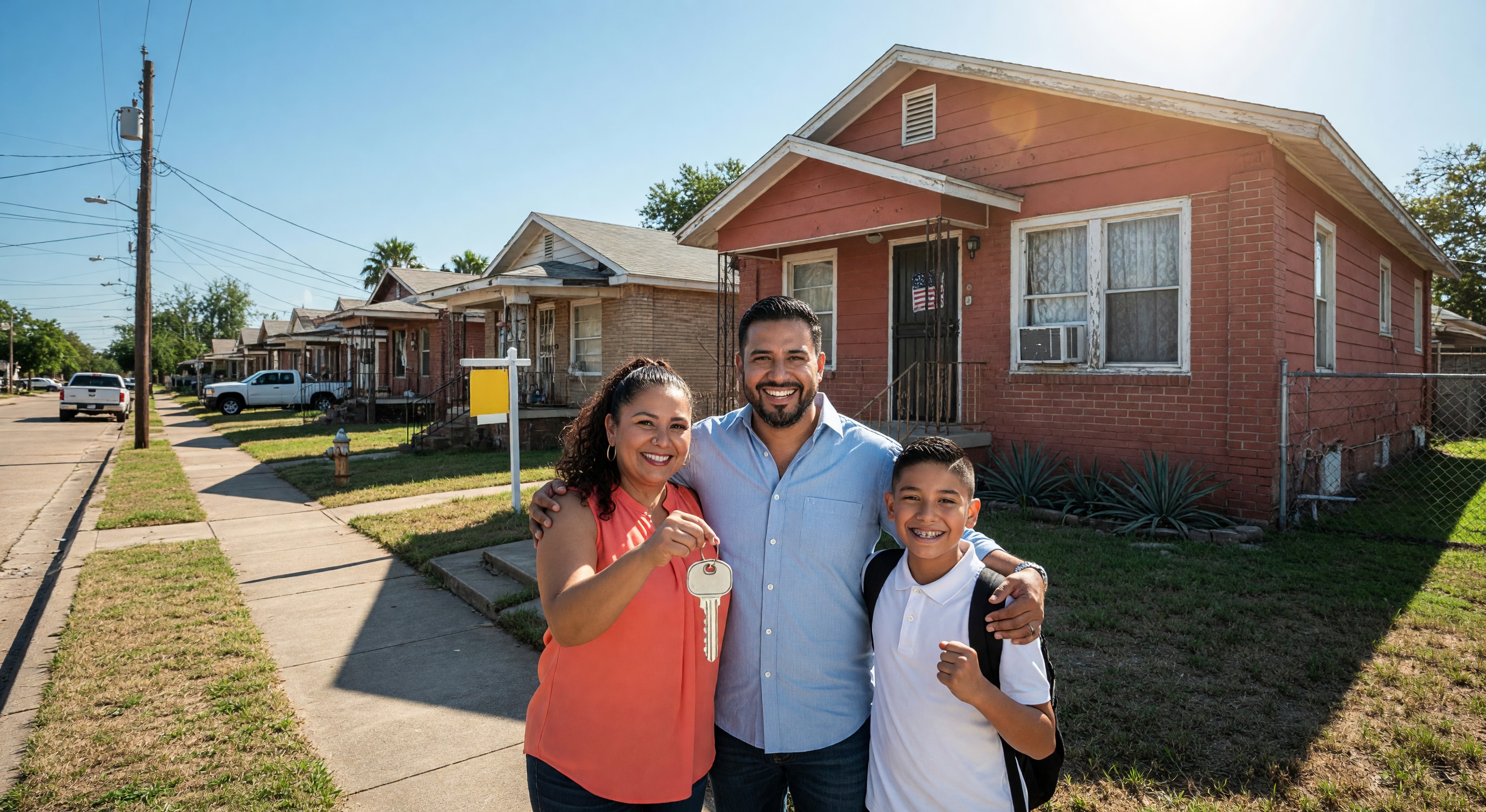
You have worked hard, saved every dollar you could, and the question keeps coming back: Can I actually buy a home here? Whether you are a permanent resident, a visa holder, or someone who has been building a life in Houston for years without a Social Security number, the answer is often yes — and the path is more defined than most people realize.
#The Law Is on Your Side
Federal law does not prohibit immigrants — regardless of status — from owning real property in the United States. The right to own land is not tied to citizenship or a Social Security number. Millions of immigrants across the country own homes today, and Houston's East End, Northside, and surrounding communities have been built in part by families who took exactly this step.
Texas did enact Senate Bill 17 (effective September 1, 2025), which restricts property purchases by foreign nationals who hold citizenship only in countries the U.S. Director of National Intelligence has designated as national security risks — currently China, Russia, Iran, and North Korea. If you are from one of those countries but lawfully reside in the U.S., you may still purchase a home intended as your primary residence. For the vast majority of Houston's immigrant community — from Mexico, Central America, South America, and beyond — SB 17 does not apply at all.
#Step 1: Secure Your ITIN If You Don't Have One
An Individual Taxpayer Identification Number (ITIN) is a nine-digit IRS number, beginning with 9, issued to people who must file or pay U.S. taxes but are not eligible for a Social Security number. The IRS has issued ITINs since 1996 — they exist precisely so immigrants can participate in the U.S. economy, pay taxes, and, eventually, buy a home.
To apply, file IRS Form W-7 along with your completed federal tax return and supporting identity documents. A valid passport is the simplest option — it satisfies both the identity and foreign-status requirements on its own. Processing typically takes 7 to 9 weeks (9 to 11 weeks during tax season, January 15 through April 30). You can apply by mail or make an appointment at an IRS Taxpayer Assistance Center.
Once you have your ITIN, use it consistently every time you file taxes. Lenders want to see at least two years of tax returns submitted under the same ITIN — that tax history is the financial record that opens the door to a mortgage.
#Step 2: Build Your Financial Foundation
ITIN mortgages carry stricter requirements than conventional loans. Getting your finances in shape before you start shopping will save months of frustration.
Here is what lenders typically look for:
- ITIN with consistent tax filing history — at least two years of federal returns under the same number
- Credit score of 600 or higher — some lenders accept alternative credit history (rental payments, utility bills, phone bills) if you have not yet established a traditional credit file
- Stable income in the same field — documented through pay stubs, W-2s, or, for self-employed borrowers, bank statements and 1099s; lenders generally want to see consistency over at least two years
- Down payment of 10% to 20% — the exact amount depends on your credit profile; borrowers with scores around 700 or higher may qualify for the lower end of that range; those with limited credit history may need 20% to 25% or more
- Two months of bank statements — showing that your down payment funds are genuinely yours and have been in your account
Starting without a credit file? Open a secured credit card, pay the balance in full every month, and ask a trusted family member or friend to add you as an authorized user on an established account. Even one to two years of on-time payments can build a credit score strong enough to qualify.
#Step 3: Understand ITIN Mortgage Loans
An ITIN mortgage is a non-conventional loan offered by portfolio lenders — financial institutions that hold the loans on their own books rather than selling them to the secondary market. Because these lenders take on more risk, interest rates are generally higher than on conventional loans, and the approval process may require more documentation.
Several Houston-area and Texas-wide lenders actively offer ITIN programs. As of June 2026, the market includes both community banks and specialty mortgage companies focused on serving immigrant homebuyers. When comparing lenders, ask specifically about:
- Minimum credit score (ranges from 600 to 680 depending on the lender)
- Down payment minimum for your credit profile
- Whether they accept alternative credit if you lack a traditional credit history
- Interest rate and full APR — understand the total cost, not just the headline rate
- Loan processing timeline — ITIN loans can take longer than conventional mortgages
As of June 2026, Houston's median single-family home price hovers around $332,000, and the market is increasingly favorable for buyers. Homes are averaging 66 days on market — that slower pace gives you more time to make an informed decision and negotiate concessions like seller contributions toward closing costs.
#Step 4: Navigate the Houston Market and Closing Process
Houston offers some of the most affordable urban housing of any major American city. Its historically immigrant-rooted neighborhoods — the East End (EaDo, Magnolia Park, Second Ward), the Northside, and surrounding areas along the I-69 corridor — carry price points that frequently fall below the city median. These are communities with deep roots and a genuine sense of belonging for families who are building lives here.
The Texas purchase process follows a clear sequence:
- Get pre-approved by your ITIN lender before making any offer
- Submit an offer using the standard TREC contract (the form required by the Texas Real Estate Commission)
- Negotiate the option period — typically 5 to 10 days — during which you can back out for any reason for a small fee, usually $100 to $500
- Order a professional inspection during the option period
- Apply for title insurance and let the title company search the property's ownership history for liens or defects
- Complete loan underwriting and satisfy any remaining lender conditions
- Attend closing, sign all documents, and receive your keys
Closing costs in Texas typically run 2% to 5% of the purchase price and include title insurance, lender fees, prepaid taxes and insurance, and county recording fees. Budget for these in addition to your down payment.

#Step 5: Why Legal Review at Closing Protects You
In Texas, your real estate agent works with standard TREC residential contract forms. Agents are strictly prohibited from adding custom provisions that have legal effect or from giving legal advice — that boundary is set by Texas law, not by any individual agent's willingness to help.
A real estate attorney has no commission at stake and no incentive tied to whether the deal closes. An attorney can:
- Review the contract before you sign and explain every term in plain language
- Draft a custom special provisions addendum that protects your specific interests — repair requirements, seller credits, or contingencies your agent cannot write into the standard form
- Verify that the title is clean and that you are not inheriting someone else's lien, debt, or ownership dispute
- Flag language that could cost you your earnest money deposit or expose you to unexpected liability
Attorney contract review in Texas typically costs $250 for a home priced up to $750,000 — a modest investment relative to what may be the largest purchase of your life.
Once you close, an attorney or trusted advisor can also guide you through filing for the Texas homestead exemption. As of November 2025, voters approved Proposition 13, raising the school district homestead exemption to $140,000. Harris County additionally provides a 20% optional exemption. Any Texas homeowner who occupies a property as their primary residence qualifies — there is no citizenship requirement. Apply by April 30 of the tax year, with a Texas driver's license or state ID showing the property address.
#Your Immigration Status Does Not Change Your Rights as a Buyer
Owning a home does not affect your immigration status, and your immigration status does not disqualify you from owning property. Consultations with our office are confidential. If you have questions about how a home purchase might interact with a pending immigration case, we can connect you with the right guidance — but real estate ownership is a right that belongs to you regardless of where you are in that process.
We have two offices in Houston: 1603 W. Alabama St. in Montrose and 6841 Avenue I in the East End. We are bilingual — se habla español — and we are here to read every line of your contract before you sign anything.
For more information on the firm's real estate services, visit kristopheralvarez.com. If you are also navigating family or immigration matters alongside your home purchase, our immigration and family law guides can help.
#Frequently Asked Questions
Can I buy a home in Houston without a Social Security number?
Yes. Federal law does not require a Social Security number to own real property in the United States. Many Houston-area lenders offer ITIN mortgage programs designed specifically for buyers who file taxes under an Individual Taxpayer Identification Number.
How much do I need for a down payment on an ITIN loan in Texas?
Most ITIN lenders require between 10% and 20% down, though the exact amount depends on your credit profile. Borrowers with credit scores near 700 or higher may qualify for the lower end; those with limited credit history may need 20% to 25% or more. Ask each lender about their specific program requirements.
Does Texas SB 17 affect immigrant homebuyers from Latin America?
No. Texas Senate Bill 17 (effective September 1, 2025) applies only to nationals of countries designated by the U.S. Director of National Intelligence as national security risks — currently China, Russia, Iran, and North Korea. It does not restrict homebuyers from Mexico, Central America, South America, or the vast majority of other countries.
Will buying a home in Houston affect my immigration case?
Purchasing real estate does not, by itself, change your immigration status. However, demonstrating financial stability and community ties can be relevant in certain immigration proceedings. Speak with a qualified immigration attorney about your specific situation before assuming any connection between real estate ownership and your case.
Can I claim the Texas homestead exemption as an immigrant homeowner?
Yes. The homestead exemption is available to any Texas homeowner who occupies a property as their principal residence — there is no citizenship requirement. As of 2025, the school district exemption is $140,000. Harris County adds a 20% optional exemption. Apply by April 30 with your Texas driver's license or state ID showing the home address.
Do I need a real estate attorney to close on a home in Texas?
Texas law does not require a real estate attorney to close a residential transaction. However, having one is a meaningful protection. An attorney is the only professional at the table who can give you legal advice, add provisions beyond the standard TREC form, and confirm that the title is clean before you commit.
#Schedule a Consultation
You have spent years building something worth protecting. Before you sign any real estate contract, contact the Law Office of Kristopher A. Alvarez, PLLC to schedule a consultation. We will review your contract, explain every term in plain language — in English or in Spanish — and make sure your first home purchase begins on solid ground.
Call or text (832) 404-2300 or book an appointment online at kristopheralvarez.com/agendar.
You may also like

How to Prepare for Your Asylum Interview in Houston
Step-by-step guide to Houston asylum interviews: what to bring, how to build your narrative, and the Águila Method that turns fear into preparation.

How to File for Divorce in Houston Without Losing What's Yours
Practical Houston divorce guide: Texas community property rules, the Harris County court process, and how to protect your assets from day one.
Hit by an Uninsured Driver in Houston? Here's What Happens Next
One in five Texas drivers has no insurance. If an uninsured driver hit you in Houston, here's exactly how to protect your claim and pursue full compensation.
This article is general information only and is not legal advice. Reading it does not create an attorney-client relationship.