
How Much Is a Car Accident Case Worth in Houston?

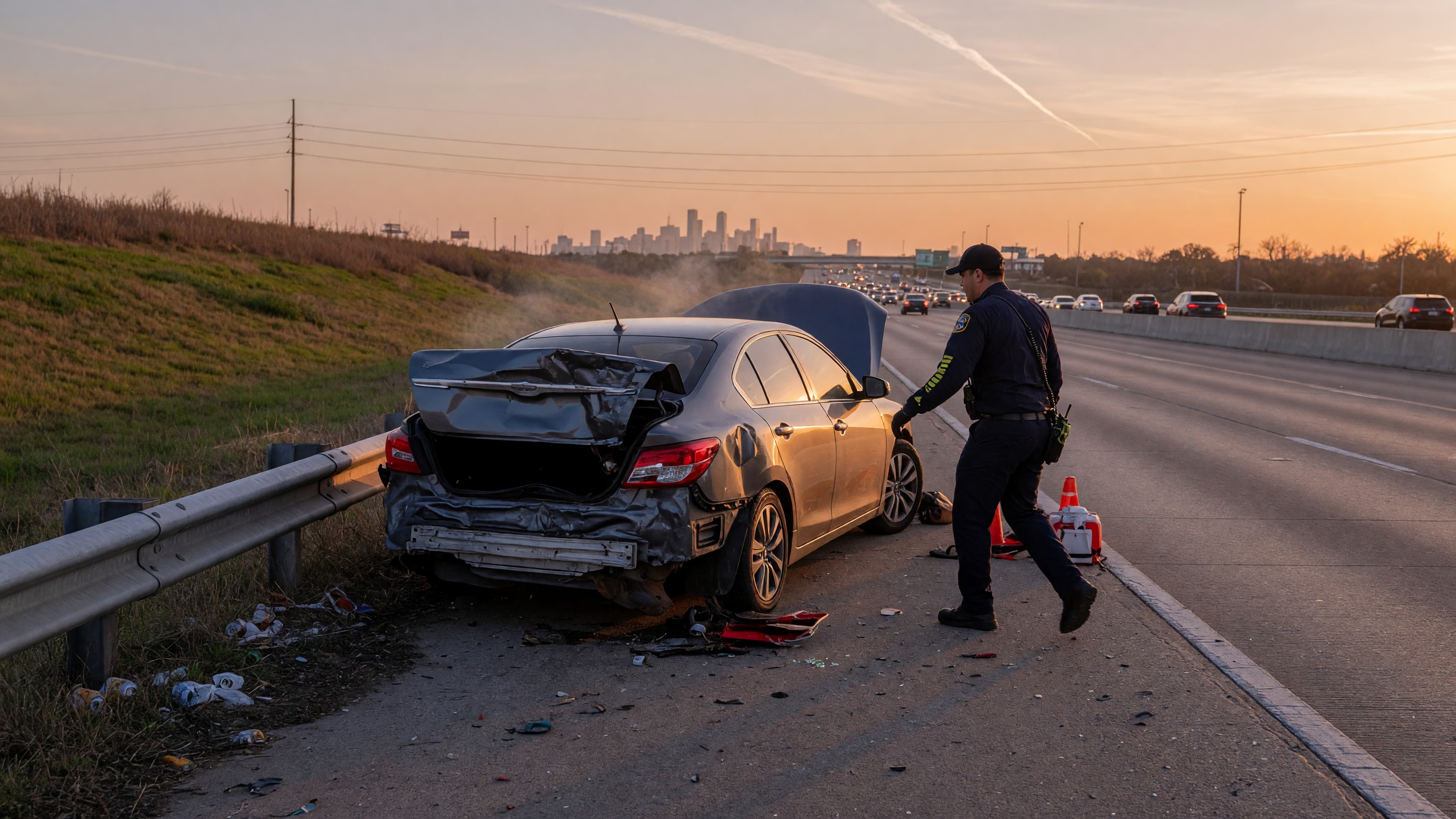
You're sitting at home nursing a painful back injury, watching medical bills pile up, and wondering whether your case is worth pursuing — or wondering why the insurance company's offer seems insultingly low. You are not alone. Every week, injured Houstonians across the I-10 corridor and the 610 Loop face this same question, and the honest answer is: your case value depends on a specific set of factors that a good attorney can help you document and maximize.
This guide walks you through exactly how Houston car accident case values are calculated, what drives them up, and what can reduce your recovery.
#The Two Big Categories: Economic and Non-Economic Damages
Texas law divides the money you can recover into two main buckets.
Economic damages cover your out-of-pocket, dollar-for-dollar losses:
- Past and future medical bills — emergency room, surgeries, imaging, physical therapy, medications
- Lost wages from time missed at work while you recovered
- Loss of future earning capacity if your injuries prevent you from returning to the same work
- Vehicle repair or replacement
- Out-of-pocket expenses like transportation to medical appointments and home care
Non-economic damages compensate for harms that don't come with a receipt:
- Pain and suffering — physical pain and the mental anguish that follows a serious crash
- Emotional distress — anxiety, depression, PTSD
- Disfigurement — permanent scarring or loss of a limb
- Loss of consortium — the impact on your relationship with your spouse or family
- Loss of enjoyment of life — the activities you can no longer do
Unlike some states, Texas does not cap non-economic damages in ordinary car accident cases. That means a jury can award whatever it finds fair for your pain and suffering.
#How Pain and Suffering Is Actually Calculated
There's no simple formula written into Texas law, but insurance adjusters and personal injury attorneys typically use one of two approaches.
The Multiplier Method is the most common starting point. You total all your economic damages, then multiply by a number between 1.5 and 5 — depending on how severe and permanent your injuries are. A soft-tissue injury that heals in two months might carry a multiplier of 1.5. A herniated disc requiring spinal surgery with permanent nerve damage could justify a multiplier of 4 or 5.
Example: $40,000 in medical bills + $15,000 in lost wages = $55,000 in economic damages × 3 (moderate permanent injury) = $165,000 in pain and suffering on top of the $55,000 economic total.
The Per-Diem Method assigns a daily dollar value to your suffering — often tied to what you earned per day — and multiplies it by the number of days you suffered.
Neither method is binding on a jury. What ultimately matters is the totality of your documented evidence: your medical records, your treating doctors' narratives, witness accounts of your daily limitations, and the strength of your attorney's presentation.
#Eight Factors That Move Your Case Value
1. Injury Severity and Permanence
A minor soft-tissue sprain that heals in eight weeks commands far less than a traumatic brain injury, spinal cord damage, or a broken pelvis requiring multiple surgeries. Permanent injuries — especially those that change what you can do for a living — drive case values into the hundreds of thousands.
2. Quality of Medical Documentation
Your medical records are your evidence. Gaps in treatment hurt cases dramatically. If you stopped going to the doctor two weeks after the crash, an insurer will argue you recovered. Consistent, documented care — from the ER through follow-up visits with your treating physicians — builds the story that supports your damages.
3. Liability Clarity
The cleaner the other driver's fault, the stronger your position. A rear-end collision on the Southwest Freeway where the at-fault driver received a citation is very different from a disputed intersection collision where both drivers claim the green light.
4. Texas's 51% Comparative Fault Rule
Under Texas Civil Practice and Remedies Code Chapter 33, you can recover damages as long as you are 50% or less at fault for the crash. But your recovery is reduced by your percentage of fault. If a jury finds you 20% responsible for a $100,000 verdict, you receive $80,000. If they find you 51% at fault, you receive nothing — the law completely bars recovery above that threshold.
This is why insurers aggressively try to place blame on the injured party. Document everything at the scene, and call an attorney before giving a recorded statement to any insurance company.
5. Available Insurance Coverage
Texas requires minimum liability limits of $30,000 per person / $60,000 per accident / $25,000 property damage (the 30/60/25 rule). Many drivers carry only the minimum. If the at-fault driver's policy is $30,000 and your medical bills are $80,000, your recovery from that policy is capped — unless you have uninsured/underinsured motorist (UM/UIM) coverage on your own policy.

Roughly 14 to 20 percent of Texas drivers carry no insurance at all. Having UM/UIM coverage on your own policy is one of the most important protections you can buy before an accident, not after.
6. Whether Commercial Vehicles or Drunk Drivers Were Involved
Accidents involving semi-trucks on I-45 or I-10, rideshare vehicles, or delivery drivers open up commercial insurance policies that often have limits of $1 million or more. Drunk driving cases may support a claim for punitive damages — additional money designed to punish egregious conduct. Under Texas law, punitive damages are capped at twice your economic damages plus $750,000 in non-economic damages, or $200,000 — whichever is greater.
7. Economic Impact on Your Household
Jurors and adjusters respond to specifics. A self-employed contractor in the East End who cannot swing a hammer for six months faces very different economic harm than someone whose job allows remote work during recovery. Detailed documentation of lost business income, canceled contracts, or job demotion matters enormously.
8. Speed of Negotiation vs. Trial
Insurance companies know that injured people under financial stress may accept quick, low settlements. Cases that go to trial in Harris County often result in significantly higher awards — but trials take time. An experienced Houston personal injury attorney knows when a settlement offer is fair and when to fight.
#What a Real Houston Case Might Look Like
To illustrate, consider a hypothetical scenario many Houston attorneys encounter regularly:
A driver on US-59 (I-69) rear-ends your car at highway speed. You suffer a herniated disc at L4-L5, spend three days in the hospital, undergo six months of physical therapy, and miss four months of work as a warehouse supervisor. Your documented damages might look like this:
- Medical bills: $85,000
- Lost wages: $28,000
- Future physical therapy: $12,000
- Economic total: $125,000
- Pain and suffering (multiplier of 3, moderate-severe injury): $375,000
- Total potential damages: $500,000
Whether you recover that full amount depends on the at-fault driver's coverage, whether there are other defendants (like an employer or a vehicle owner), and how liability shakes out. This is why consulting an attorney early — before the bills overwhelm you — can make the difference between a low settlement and a fair recovery.
#What an Attorney Actually Does for Your Case Value
Many people wonder whether hiring an attorney is worth it. Research consistently shows that injury victims represented by attorneys recover significantly more than those who negotiate alone, even after legal fees. A contingency-fee arrangement means you owe nothing unless your attorney wins.
An experienced Houston personal injury attorney will:
- Preserve and request evidence before it disappears (dashcam footage, black box data, witness contacts)
- Send a demand letter to all available insurance carriers
- Retain medical and economic experts to document your damages
- Identify all potentially liable parties (the driver, their employer, a vehicle owner, a manufacturer)
- Navigate the Texas comparative fault argument to protect your percentage of fault
- Negotiate aggressively — and take the case to a Harris County jury if the insurer refuses to be reasonable
#Next Steps After a Houston Car Accident
If you've been injured in a crash, take these steps to protect your case value:
- Seek immediate medical care — even if you feel okay, whiplash and disc injuries often develop within 24-72 hours
- Document everything — photos of the scene, your injuries, all vehicles, weather, and road conditions
- Get the police report — HPD or Harris County Sheriff report establishes a baseline of fault
- Do not give a recorded statement to any insurer without speaking to an attorney first
- Keep a daily log of your pain levels, limitations, and activities you can no longer do
- Call a Houston personal injury attorney before accepting any settlement offer
The law does set a deadline for filing a personal injury lawsuit in Texas — consult an attorney promptly so your rights are protected.
#Frequently Asked Questions
How long does it take to settle a Houston car accident case?
Most straightforward Houston car accident cases with clear liability and fully-healed injuries settle within three to six months. Cases involving serious permanent injuries, disputed fault, or multiple defendants can take one to two years or longer, especially if litigation is needed. It's generally wise not to settle until your medical treatment is complete and your doctors have assessed permanent impairment — settling too early can leave significant money on the table.
Does immigration status affect my right to compensation in Houston?
No. Your immigration status does not affect your right to bring a personal injury claim in Texas. If another driver's negligence injured you, you have the same right to recover medical bills, lost wages, and pain and suffering as any other injured person. Consultations at our office are strictly confidential.
What if the at-fault driver has no insurance?
If the at-fault driver is uninsured, your own UM (uninsured motorist) coverage steps in to pay your damages — up to your policy's limits. If they are insured but their limits are too low for your injuries, your UIM (underinsured motorist) coverage makes up the gap. See our guide on what to do when you're hit by an uninsured driver in Houston for a detailed breakdown.
Can the insurance company really reduce my settlement because I was partly at fault?
Yes. Under Texas's modified comparative fault system, your damages are reduced by your percentage of fault. If you were 25% responsible and your damages are $100,000, you recover $75,000. However, if the insurer places your fault at 51% or higher, you recover nothing — which is why insurers often try to shift blame. Having an attorney protects you from fault being overstated.
What should I do at the scene to protect my case value?
Call 911 to get a police report. Take photos of all vehicles, license plates, road conditions, and any injuries. Get names and contact information for all witnesses. Do not apologize or discuss fault. Seek medical attention that same day, even if symptoms seem minor — documented early treatment is critical to your case.
Should I accept the insurance company's first offer?
Almost never. First offers from insurers are typically far below the full value of your claim. Insurers are trained to settle quickly and cheaply before you understand your rights or the full extent of your injuries. Speaking with a Houston personal injury attorney before accepting any offer — even a seemingly generous one — costs you nothing under a contingency-fee arrangement.
You don't have to figure this out alone. The Law Office of Kristopher A. Alvarez, PLLC handles car accident cases on a contingency-fee basis — you pay nothing unless we recover for you. We offer a free consultation to injured Houstonians and their families. Call or text us at (832) 404-2300, visit our Montrose office at 1603 W. Alabama St. or our East End office at 6841 Avenue I, or book your appointment online. Se habla español.
You may also like

What to Do After a Car Accident in Houston
Just got in a crash in Houston? Follow this step-by-step guide to protect your health, your rights, and your injury claim under Texas law.
Hit by an Uninsured Driver in Houston? Here's What Happens Next
One in five Texas drivers has no insurance. If an uninsured driver hit you in Houston, here's exactly how to protect your claim and pursue full compensation.

How to Prepare for Your Asylum Interview in Houston
Step-by-step guide to Houston asylum interviews: what to bring, how to build your narrative, and the Águila Method that turns fear into preparation.
This article is general information only and is not legal advice. Reading it does not create an attorney-client relationship.